
Yiwu, Foshan or Shenzhen? How to Choose the Right City for a Sourcing Visit
Compare Yiwu, Foshan and Shenzhen by buyer task, product fit, visit rhythm, supplier access, logistics and the evidence a sourcing team should bring home.
A productive sourcing trip starts with a business decision, not a city name. Yiwu is optimized for rapid product discovery and multi-supplier comparison across small commodities. Foshan is strongest for specification-heavy home, furniture and building-material categories. Shenzhen suits electronics, components, product development and technology supply-chain work.
The right choice depends on the work the buying team must complete: exploration, supplier qualification, technical development, sample approval or production problem-solving. Combining all these objectives in one itinerary usually produces shallow meetings, inconsistent quotations and evidence that cannot support a purchasing decision.
A city can also be the correct commercial base even when production occurs elsewhere. A Shenzhen sales or engineering office may coordinate a factory in Dongguan or Huizhou, while a Yiwu booth may represent a factory in another province. Always verify the legal supplier, actual production address and entity that will appear on the contract.
Select the city by buyer task
Start with the decision the visit must produce
Define one primary outcome before booking travel. It may be to:
- Build a shortlist for a new category.
- Compare existing products and price points.
- Qualify factories and production capacity.
- Develop or revise a technical product.
- Approve samples, packaging or quality standards.
- Resolve a production or delivery problem.
Too many objectives create conflicting schedules. Product discovery favors many short conversations, while a factory audit or engineering review requires sustained access to people, records and facilities. Trying to fit both into every meeting reduces the quality of each.
Write a one-sentence trip mandate that can be tested at the end of the visit. For example:
Return with three verified suppliers, comparable quotations and one approved reference sample.
City-selection matrix
| Decision factor | Yiwu | Foshan | Shenzhen |
|---|---|---|---|
| Best buyer task | Broad product discovery, assortment building and fast supplier comparison | Factory and showroom evaluation for specification-heavy home and construction categories | Electronics sourcing, component selection, engineering discussions and prototype iteration |
| Strong product fit | Gifts, accessories, stationery, toys, seasonal goods, household items, packaging and other small commodities | Furniture, ceramics, sanitaryware, flooring, doors, building materials, home hardware and selected appliances | Consumer electronics, electronic components, smart devices, communications hardware, accessories and embedded technology |
| Typical first-visit rhythm | Many short booth meetings and rapid screening in a concentrated wholesale-market environment | Fewer, longer appointments across showrooms, factories and industrial clusters, with substantial driving time | A split schedule involving markets, supplier offices, labs or engineering teams, with possible factory trips outside central Shenzhen |
| Supplier access | Easy access to many vendors, although booths may represent traders, factories or mixed business models | Strong direct access when appointments are arranged with factories and category-specific showrooms | Strong commercial and technical access, but manufacturing may be in Dongguan, Huizhou or elsewhere in the Pearl River Delta |
| MOQ tendency | Often flexible for existing products or mixed assortments; customization can increase requirements | Commonly higher because of materials, dimensions, finishes and production setup | Highly variable: low for stocked components, higher for custom tooling, firmware or complete devices |
| Logistics pattern | Consolidation is useful when orders are spread across vendors; ocean freight commonly routes through eastern China ports | Bulky or fragile cargo requires protection, loading and container planning; exports connect through Pearl River Delta ports | Strong air and ocean options, especially for compact, higher-value or time-sensitive products |
| Main visit risk | Mistaking a market vendor for the actual manufacturer | Underestimating travel time, customization complexity and packaging requirements | Assuming a trading office, component stall or design company controls production |
| Evidence to bring home | Booth and legal-entity records, comparable quotes, samples, MOQ tiers and a consolidation plan | Material and finish samples, drawings, factory evidence, packaging specifications and load calculations | BOM details, component traceability, test reports, prototype records, ownership terms and factory verification |
| Choose this city when… | The team needs breadth and speed | The team needs physical inspection and specification control | The team needs technical depth and rapid development feedback |
Apply three quick decision rules
- Choose Yiwu when the assortment contains many relatively standardized, low-complexity items from multiple suppliers.
- Choose Foshan when dimensions, materials, finishes, installation, packaging or container utilization determine commercial success.
- Choose Shenzhen when the product depends on components, tooling, software, testing, certification or engineering coordination.
- If two cities appear equally suitable, choose the one that can resolve the trip’s highest-risk assumption.
Compare the three city playbooks
Yiwu: Build and compare an assortment quickly
Buyer task and product fit
Yiwu is suited to scanning a category, identifying price bands and building a broad supplier shortlist. It is particularly effective when the buyer needs complementary ready-made or lightly customized products that can be consolidated into one shipment.
Strong categories include gifts, stationery, accessories, toys, seasonal goods, household products and packaging. Highly technical, heavily regulated or unusually large products require deeper factory-level diligence than a market meeting can provide.
Visit rhythm and supplier access
Plan short, structured booth conversations instead of long introductions. Group visits by category, record booth locations immediately and reserve time at the end of each day to normalize quotations and label samples.
Do not assume a booth is the factory. Ask whether the contact is a manufacturer, authorized sales office, trader or consolidator. Collect the legal company name, factory address and a basic explanation of the production process. Arrange factory visits after the first screening has reduced the shortlist.
Logistics and evidence
Mixed-SKU consolidation can improve shipment economics, but extra receiving, handling, inspection and warehouse charges may offset the benefit. Confirm carton standards, labeling rules, warehouse receiving procedures and readiness dates.
Bring home:
- Supplier identity and booth-location records.
- Product photographs linked to model numbers and samples.
- MOQ and price tiers quoted under the same Incoterm.
- Customization charges, lead times and packaging details.
- A consolidation map listing each supplier, carton count and readiness date.
Foshan: Validate materials, workmanship and production capability
Buyer task and product fit
Foshan is appropriate when material, construction, finish, dimensions, installation or durability determine whether a product is acceptable. Core categories include furniture, ceramics, sanitaryware, flooring, doors, home hardware and related building materials.
These categories are often difficult to evaluate through photographs alone. Buyers may need to compare surface treatment, color consistency, structural details, hardware, joints and protective packaging in person. Category clusters can also be geographically dispersed across the Foshan area.
Visit rhythm and supplier access
Schedule fewer suppliers per day than in Yiwu. Allow time for showroom review, sample-room comparison, production-floor inspection and transit. Keep a buffer for revising drawings, finish schedules or tolerance notes after seeing the product.
Book appointments in advance and confirm that access includes the production floor. A polished showroom is not proof of factory ownership or capacity. Establish which processes are completed in-house, which are subcontracted and where each subcontractor is located.
Logistics and evidence
Review fragility, moisture protection, palletization, knock-down construction and container loading. Calculate landed cost by shipment volume and damage risk rather than by unit price alone. Confirm responsibility for loading supervision and damage-prevention standards.
Bring home:
- Signed or clearly labeled material, color and finish samples.
- Dimensioned drawings and approved tolerance notes.
- Factory photographs tied to process stages and equipment.
- Packaging diagrams and relevant test expectations.
- Container-loading calculations.
- Capacity, lead-time and subcontracting records.
Shenzhen: Resolve technical and product-development questions
Buyer task and product fit
Shenzhen is the strongest choice when sourcing work depends on engineering coordination. Typical tasks include selecting components, reviewing prototypes, qualifying electronics suppliers and investigating testing, certification, tooling, firmware or component availability.
Suitable categories include consumer electronics, smart hardware, electronic components, connectivity products and technology accessories. Keep component sourcing separate from finished-product manufacturing: a seller with component access may not control assembly, testing or final quality.
Visit rhythm and supplier access
Use market visits for discovery, availability checks and price signals. Reserve longer meetings for engineering reviews, prototype evaluation and quality-system audits. If production is outside Shenzhen, include sufficient travel time to reach the actual factory.
Confirm whether the contact controls engineering, tooling, assembly or only sales. Identify any contract manufacturer and establish which entity owns the design, employs the engineers and operates the production line. Include the buyer’s engineer or a technically capable third party when specifications are complex.
Logistics and evidence
Compare air and ocean freight using product value, weight, delivery risk and battery status. Batteries, magnets and other regulated components may trigger dangerous-goods documentation or carrier restrictions. Component lead times and allocation risk should be checked before accepting finished-product delivery promises.
Bring home:
- The current BOM and approved component list.
- Written component-substitution rules.
- Prototype revision history and open engineering issues.
- Test reports matched to exact model numbers.
- Certification scope and applicant or manufacturer details.
- Tooling ownership, firmware ownership and source-file terms.
- Factory identity, line-capacity evidence and quality-control records.
Plan a first visit that produces usable evidence
Complete the first-visit planning checklist
- State one primary trip outcome and no more than two secondary outcomes.
- Select the city using the task and product-fit matrix.
- Prepare a standardized request for quotation.
- Send specifications, drawings, target standards and forecast volumes before meetings.
- Categorize prospects as manufacturers, traders, market vendors, design companies or service providers.
- Confirm whether each address is a market booth, showroom, office or factory.
- Verify the actual production location.
- Build realistic transit time into the schedule.
- Assign a commercial lead, technical reviewer, note-taker and sample custodian.
- Create a scorecard covering price, capability, quality, compliance, communication and risk.
- Prepare sample labels with supplier, model, date, revision and intended test.
- Decide which documents must be copied, photographed or independently verified.
- Book an interpreter or specialist when category terminology may cause ambiguity.
- Define a daily file-naming and cloud-backup process.
- Schedule an end-of-day evidence review.
- Reserve post-visit time for reference checks, sample testing and quotation normalization.
Use a repeatable meeting structure
- Confirm the supplier’s legal identity and business model.
- Review the exact product, drawing or specification.
- Ask the supplier to explain the production process.
- Establish MOQ, pricing basis, lead time and capacity.
- Review quality controls, test methods and compliance documents.
- Inspect samples or the production line where relevant.
- Record open questions, responsible people and deadlines.
- Photograph and label evidence only with permission.
- Restate the required follow-up package before leaving.
Require a minimum evidence pack
| Evidence category | Minimum item to collect | Why it matters |
|---|---|---|
| Supplier identity | Legal company name, registration details, address and named contact | Prevents confusion between a market booth, sales office and factory |
| Commercial terms | Itemized quote, MOQ, Incoterm, payment terms and validity period | Makes offers comparable |
| Product definition | Model number, specification, drawing or approved reference sample | Reduces substitution and revision disputes |
| Production capability | Process map, key equipment, line photographs or capacity records | Tests whether the supplier can make the product |
| Quality | Inspection plan, defect criteria and test method | Converts general claims into measurable controls |
| Compliance | Reports or certificates matched to the exact model and manufacturer | Helps identify irrelevant, expired or borrowed documents |
| Logistics | Carton dimensions, gross weight, loading quantity and readiness date | Supports landed-cost and delivery planning |
| Follow-up | Open-issue list with an owner and due date for every action | Turns the visit into an auditable sourcing process |
Image gallery
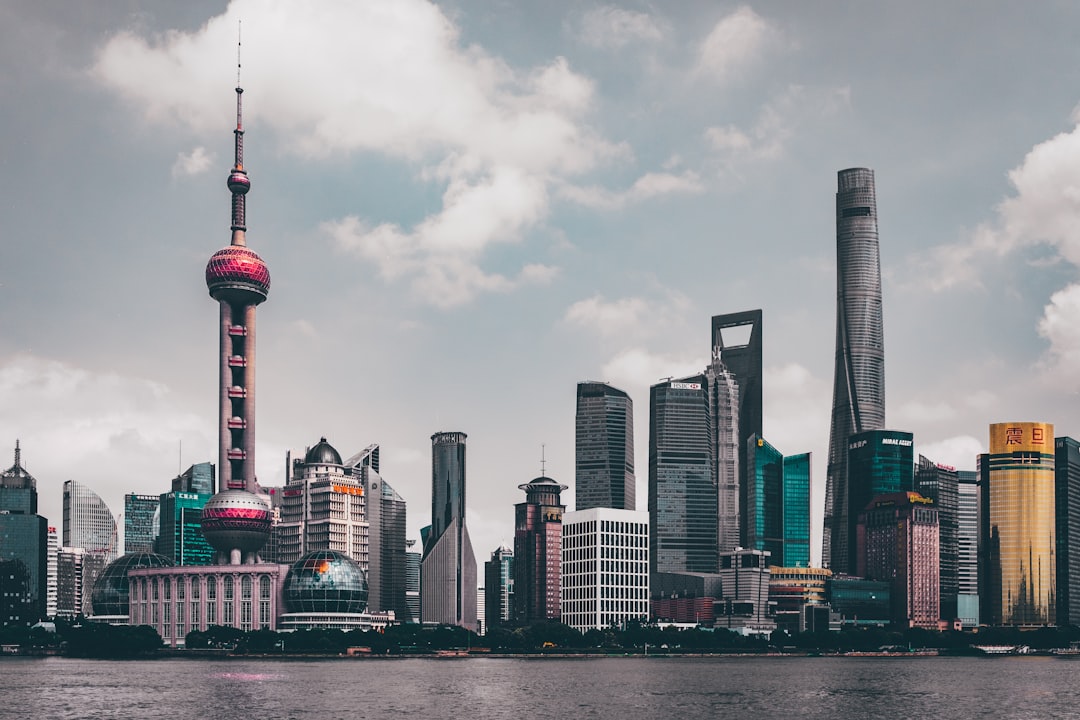
Urban China provides the wider business and supply-chain context for a sourcing visit. This photograph shows Shanghai and does not represent Yiwu, Foshan or Shenzhen.
Photo by Hanny Naibaho on Unsplash. Licensed under the Unsplash License.
Make the selection and define the next move
Check the choice against the trip’s main risk
Choose Yiwu if the main uncertainty is:
Which products and vendors belong in our assortment?
Choose Foshan if the main uncertainty is:
Can this supplier meet our material, finish, construction and shipping requirements?
Choose Shenzhen if the main uncertainty is:
Can this supply chain solve our component, engineering, testing or product-development requirements?
Reconsider the itinerary if planned meetings will not provide access to the people, facilities and records needed to answer the relevant question. A full calendar is not evidence of a productive visit.
Final next move
Complete the city-selection matrix for the actual product, then write the one-sentence trip mandate. Build an initial list of 8–12 suppliers in the selected city and request their legal identity, product fit, business model and factory location before confirming appointments.
Book the visit only after at least half of the prospects have supplied enough information to justify an in-person review. The goal is not merely to return with contacts or catalogues, but with comparable commercial terms, verified supplier identities and evidence that supports the next sourcing decision.
Sourcing information earns its value when it is verified, compared and turned into a decision.