
Build a Supplier Decision Log for China Orders: From Conversations to Owned Actions
A practical system for converting supplier calls, chats, and meetings into confirmed decisions, named actions, deadlines, evidence, and transparent exception paths.
Supplier communication becomes operationally useful only when conversations produce clear decisions and durable records. A productive call or message thread should establish what was decided, what remains open, who owns each action, when it is due, what evidence is required, and what must happen if the plan becomes unachievable.
This discipline matters when working across language fluency, time zones, communication channels, and different internal approval structures. Those factors may affect how quickly information moves, but they do not replace process clarity. Specifications, approved samples, test results, purchase orders, contracts, and written approvals should remain the controlling evidence for a China order.
The goal is not to make every conversation formal or adversarial. It is to create a repeatable meeting rhythm that reduces ambiguity while encouraging early, accurate reporting. Over time, trust should grow from corrected records, timely evidence, fulfilled commitments, and transparent exception handling—not from conversational confidence alone.
Image gallery
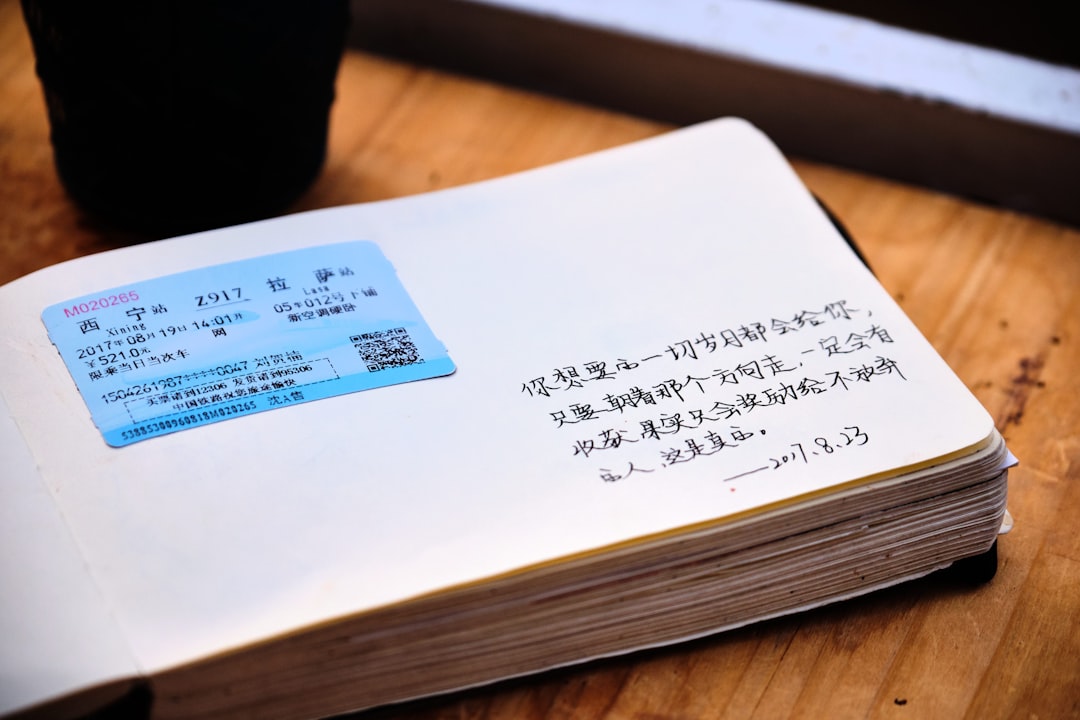
A useful supplier conversation ends with a record that identifies the decision, owner, evidence, and deadline.
Photo by Tim Cheung on Unsplash. Licensed under the Unsplash License.
1. Define What the Conversation Must Decide
Separate discussion from decision
Before scheduling a meeting or starting a message thread, identify the specific decision required. Without that focus, one discussion can blend questions about quality, price, tooling, packaging, and shipment into a general exchange that produces no executable commitment.
Label each item according to its actual status:
- Information: Facts are still being collected.
- Option: A possible approach is under review.
- Proposal: One party has recommended an approach, but approval is pending.
- Decision: An authorized person has confirmed the operational choice.
- Action: A named person must complete a measurable next step.
- Exception: An agreed commitment may not be met and requires a response.
Statements such as “we will try,” “should be possible,” or “please arrange” are not firm commitments by themselves. Clarify the owner, deliverable, deadline, approval status, and evidence before entering them as confirmed actions.
For example, instead of recording “Supplier will try to finish the samples next week,” ask: “Can you commit to completing five samples by 16:00 China Standard Time on 22 May? What evidence will confirm completion, and what approval remains outstanding?” If the supplier cannot yet confirm those details, record the item as a proposal or pending action rather than a decision.
Prepare a short decision brief
A one-page decision brief helps participants review the same facts before the conversation. It should contain:
- Product, SKU, purchase order, or project reference
- Exact decision needed
- Relevant specification, drawing revision, or approved sample
- Available options and trade-offs
- Cost, quality, and schedule constraints
- Person authorized to approve the decision
- Evidence required from the supplier
- Deadline after which the issue affects production or shipment
Keep the brief focused. Supporting files can be linked, but the page itself should make the required outcome easy to understand.
Keep cultural context in its proper role
Language fluency, time zones, communication tools, and internal approval structures can affect a supplier conversation. Ask practical questions about those conditions: Who has approval authority? Which team has the current drawing? When can engineering review the proposed change? Which channel should carry the controlled file?
Do not infer agreement, authority, capability, or reluctance from assumptions about Chinese culture. A positive response is not evidence that production has received the change, and a delayed answer is not proof of motive. Use specifications, samples, tests, contracts, purchase orders, and authorized written approvals to establish what controls the order.
2. Run a Meeting Rhythm That Produces Decisions
Open with the current facts and desired outcome
Use the same opening sequence for substantive supplier meetings:
- Confirm the relevant order, product, or issue.
- State the current facts in neutral terms.
- Identify the decision required.
- Confirm who can make or approve that decision.
- State when the decision must be reached.
For example:
“We are reviewing the carton-strength issue for PO-184. Today we need to choose either the existing carton with added protection or the upgraded carton. Please confirm who on your side can approve the construction and revised cost.”
This opening limits drift and reveals whether the necessary decision-maker is present. If no participant has authority, the meeting can still collect information, but the record should show that approval remains pending.
Resolve one decision point at a time
For every decision point, ask:
- What is the proposed action?
- Which specification, sample, drawing, or test supports it?
- What changes in cost, quality, or timing?
- Who owns the next action?
- When will the evidence or result be available?
- Who must approve the result?
- What happens if the proposed action cannot be completed?
Close or park each point before opening another. If a dependency remains unresolved, state it explicitly. For example, packaging approval may be pending the revised quotation, while the quotation may depend on the final carton dimensions. Those are linked actions, not one confirmed decision.
Test apparent agreement before moving on
General confirmation can hide different interpretations. Test agreement with questions that require operational detail:
- “Which drawing revision will production use?”
- “What quantity will be ready for inspection?”
- “Who will send the revised sample photos?”
- “Does 28 May mean production completion or cargo handover?”
- “What internal approval is still needed?”
- “Has the change been issued to the production team?”
Record unresolved dependencies instead of treating an affirmative response as final approval. A supplier may agree that an option is technically possible while still needing authorization for its cost or production release.
Close with owners, deadlines, and confirmation timing
End every substantive meeting with a spoken review of:
- Decisions made
- Items still open
- Owner of each next step
- Deliverable for each action
- Due date and time zone
- Required proof
- Final approval authority
- Date of the next review
Send the written recap during the same working day whenever practical. The shorter the gap between conversation and recap, the easier it is for participants to identify misunderstandings.
3. Convert the Conversation into a Decision Record
Use a decision-log structure instead of narrative minutes
Traditional minutes often describe what participants said without making execution responsibilities easy to find. A decision log should use structured fields that can be scanned, filtered, and updated.
| Field | What to record | Example |
|---|---|---|
| Reference | Order, SKU, drawing, or issue ID | PO-184 / SKU K27 / Packaging |
| Status | Proposed, pending evidence, approved, rejected, or superseded | Pending evidence |
| Decision | Precise operational choice | Upgrade outer carton to five-ply BC flute |
| Basis | Specification, sample, test, or commercial constraint | Failed drop test dated 14 May |
| Owner | One named person or role | Supplier packaging engineer |
| Due date | Date, time, and time zone where necessary | 17 May, 16:00 China Standard Time |
| Required evidence | Verifiable output | Carton specification sheet and repeat drop-test video |
| Impact | Cost, quality, production, or shipment consequence | Add USD 0.18 per unit; no schedule change if approved by 18 May |
| Approval authority | Person who can close the item | Buyer quality manager |
| Exception path | Action required if the commitment cannot be met | Notify buyer before 17 May with revised plan and schedule effect |
| Record link | Location of supporting files and messages | Shared order folder / Decision D-07 |
Give each decision a stable identifier. If a later decision replaces it, mark the original entry as superseded and link to the replacement. Do not delete the history, because it may explain why a specification, price, or schedule changed.
Conversation-to-record checklist
- Identify the order, SKU, sample, drawing revision, or project.
- State the exact decision or unresolved question.
- Separate confirmed facts from assumptions and proposals.
- Record the option selected and any material options rejected.
- Note the specification, sample, test, or evidence supporting the decision.
- Assign one owner to each next action.
- Add a measurable deliverable instead of writing only “follow up.”
- Set a specific deadline, including the time zone when relevant.
- Record effects on price, quality, tooling, production, and shipment.
- Identify the person authorized to approve the outcome.
- Define what the supplier should do if the plan becomes unachievable.
- Attach or link drawings, photos, test reports, quotations, and sample records.
- Ask recipients to correct the recap by a stated deadline.
- Update the purchase order, specification, or contract when the decision changes a controlled requirement.
- Mark replaced decisions as superseded rather than deleting their history.
Use neutral recap language
Neutral language focuses on the record, requirement, evidence, and next action. It avoids assigning motives or turning a correctable mismatch into a personal accusation.
| Communication need | Neutral recap example |
|---|---|
| Confirm a decision | “We recorded the agreed production material as 304 stainless steel according to specification revision C.” |
| Distinguish a proposal from approval | “The revised packaging is a proposal pending buyer approval; please do not release it to mass production yet.” |
| Assign an action | “Li Wei will send the updated carton drawing and material specification by 16:00 CST on 17 May.” |
| Clarify a date | “Please confirm whether 28 May is the production-completion date or the cargo-handover date.” |
| Request correction | “Please reply by 12:00 CST tomorrow if any item below differs from your understanding.” |
| Record an unresolved issue | “The unit-price effect remains open. Production approval will follow after the revised quotation is reviewed.” |
| Address missing evidence | “We have noted the completion statement, but approval remains pending until the inspection photos and measurement report are received.” |
| Correct a mismatch | “The drawing discussed on the call was revision B, while the purchase order references revision C. Please confirm which revision the factory has issued to production.” |
| Document an exception | “The planned sample date cannot be met because the tool adjustment is incomplete. The supplier will provide a revised completion date and schedule impact by 10:00 CST tomorrow.” |
| Preserve cooperation | “Thank you for raising the delay before the deadline. We will review the recovery plan after receiving the updated production schedule.” |
Send a concise recap in a scannable format
A practical recap should follow this order:
- Reference and meeting date
- Decisions confirmed
- Open items
- Action-owner-deadline list
- Evidence required
- Cost or schedule changes
- Exceptions requiring escalation
- Correction deadline
- Links to controlled documents
A concise recap might state:
PO-184 packaging recap — 16 May
Confirmed: The supplier will prepare a five-ply BC-flute carton proposal. This is not yet approved for mass production.
Action: Supplier packaging engineer to send the drawing, material specification, quotation, and repeat-test plan by 16:00 CST on 17 May.
Approval: Buyer quality manager will approve or reject the proposal by 18 May.
Exception path: If the documents cannot be completed by the deadline, notify the buyer beforehand with the reason, revised delivery time, and production impact.
Correction request: Please identify any difference from your understanding by 12:00 CST on 17 May.
The recap supports execution, but it does not replace a required purchase-order amendment, signed specification, approved change order, or contractual notice. When a decision changes a controlled requirement, transfer it into the controlling document before production proceeds.
4. Build Trust Through Delivery, Feedback, and Transparent Exceptions
Track repeated delivery rather than conversational confidence
Trust develops when records and results remain consistent over multiple milestones. Evaluate communication reliability through observable behavior:
- Recaps are reviewed and corrected when inaccurate.
- Documents arrive by the agreed deadline.
- Evidence matches the claimed production status.
- Problems are raised before they become missed milestones.
- Approved changes reach production, engineering, quality, and logistics.
- Commitments remain consistent across supplier departments.
- Corrective actions prevent recurrence.
Use this history to determine the appropriate level of verification for future orders. A supplier with consistent, evidence-backed delivery may justify streamlined follow-up. Repeated mismatches, late disclosures, or uncontrolled changes may require additional inspections, approvals, or management escalation.
Give feedback tied to process effects
Structure feedback around four elements:
- Observed fact: What happened?
- Requirement: What was expected?
- Operational effect: What risk or delay resulted?
- Next control: What must change?
For example:
“The revised label file reached us two days after the agreed deadline. This left insufficient time for regulatory review before printing. For the next revision, please send the final artwork and version number at least three working days before the print-release date.”
This approach is direct without speculating about personality, nationality, or motives. It also gives the supplier a specific control that can be implemented and checked.
Make exception reporting safe and specific
An exception should be reported as soon as a commitment becomes doubtful, not only after the deadline has passed. Ask the supplier to include:
- Original commitment
- Current actual status
- Cause supported by available evidence
- Quantity or milestone affected
- Quality, cost, and schedule impact
- Immediate containment
- Recovery options
- Decision required from the buyer
- Time of the next update
Make clear through your own response that early, accurate reporting is preferable to unsupported reassurance followed by a late surprise. Thanking a supplier for timely disclosure does not mean accepting the delay; it reinforces transparent reporting while preserving the right to review impact and remedies.
Apply a proportionate escalation path
| Exception level | Example | Required response |
|---|---|---|
| Routine variance | Document due several hours late with no production effect | Update the log and confirm the new delivery time |
| Controlled issue | Sample failure with time available for correction | Record containment, owner, retest method, and deadline |
| Material risk | Change may affect compliance, function, or shipment | Pause the affected step and obtain authorized written approval |
| Critical breach | Unauthorized substitution, false status evidence, or repeated concealed delay | Escalate to management, preserve records, inspect affected goods, and review contractual remedies |
Escalation should match the operational risk. Not every delay requires a production stop, but changes affecting safety, compliance, function, or contractual requirements should not proceed on informal assurances.
Close the feedback loop
Do not close an entry merely because someone reports that the action is complete. Verify completion against the evidence and acceptance criteria identified in the log.
The closing process should:
- Verify the deliverable with evidence.
- Compare the result with agreed acceptance criteria.
- Record approval, rejection, or further action.
- Update controlled documents where required.
- Note whether the exception was isolated or repeated.
- Include the result in supplier-performance reviews and future order controls.
A completed decision record shows not only what people intended to do, but what was delivered, verified, and approved.
Final Next Move
Create the first live decision log
After your next substantive supplier conversation:
- Select one unresolved order issue.
- Write the exact decision, owner, deadline, required evidence, and exception path.
- Send a neutral recap within the same working day.
- Ask all relevant participants to correct inaccuracies by a specific time.
- Transfer any approved change into the controlling purchase order, specification, drawing, or change order.
- Review delivery against the record at the next milestone.
- Keep the completed entry as evidence for future supplier-performance and sourcing decisions.
Start with one live issue rather than redesigning your entire communication system. A single well-maintained decision log can establish the rhythm: clarify the decision, assign ownership, collect evidence, handle exceptions openly, and preserve the final record.
Sourcing information earns its value when it is verified, compared and turned into a decision.