
Which Sourcing Evidence Do You Need Next? A Three-Section Route for Buyers
Choose between Sourcing methods, Factory checks, and Quality control according to the evidence needed for your next buyer decision.
Sourcing decisions often fail because buyers gather evidence in the wrong order—or treat supplier selection, factory capability, and product conformity as if they were the same question. They are not. A promising quotation does not prove that a factory can perform the work, and a functioning factory does not prove that a particular sample or production batch meets the agreed requirements.
This collection separates those questions into three evidence needs. Commercial and operational fit concerns how the buyer will source. Supplier capability concerns whether the proposed factory can perform the required work. Product conformity concerns whether actual output meets measurable requirements. Together, Sourcing methods, Factory checks, and Quality control form a buyer decision system rather than a reading list.
You can enter the collection at any point. A new project will normally begin with Sourcing methods. A buyer already considering a supplier may begin with Factory checks. If samples, production, or shipments are underway, Quality control is likely to be the urgent starting point. This landing page routes you to the appropriate section; it does not replace the procedures, templates, or evidence standards provided within those sections.
The sequence: method, capability, conformity
- Choose the sourcing method. Establish the buying route, supplier type, communication structure, responsibilities, and evidence needed before committing resources.
- Check the factory. Test whether the proposed site, people, equipment, records, and processes can support the intended order.
- Control quality. Convert requirements into measurable checks and use the resulting records to approve, correct, rework, hold, or reject output.
Each stage supplies the basis for the next. The sourcing method determines which suppliers enter consideration and which claims require verification. Factory checks test whether those claims are supported by observable, order-relevant capability. Quality control then tests whether that capability produces conforming goods in practice.
The relationship is iterative, not purely linear. A failed factory check may require another supplier or a different sourcing method. Repeated defects may expose an inaccurate capability assessment. Changes in product scope, order volume, deadlines, or production route may require all three evidence sets to be reviewed again.
Buyer question to section comparison
| Buyer question | Evidence needed now | Start here | Decision supported | Practical result |
|---|---|---|---|---|
| Should I buy directly, use an intermediary, consolidate suppliers, or take another route? | Sourcing options, trade-offs, responsibilities, and information gaps | Sourcing methods | Select an appropriate buying approach | A defined sourcing route and supplier-search brief |
| Does this supplier operate the factory it claims to use? | Business records, site evidence, process observations, and consistency checks | Factory checks | Continue verification, pause, or remove the supplier | A documented capability and risk assessment |
| Can this factory handle the required materials, processes, volume, and schedule? | Equipment, staffing, production-line, capacity, and sample evidence | Factory checks | Decide whether the site suits the proposed order | A capability finding tied to order requirements |
| What should be checked before a sample or batch is approved? | Measurable criteria, tolerances, test methods, and acceptance rules | Quality control | Approve, correct, rework, or reject output | A usable inspection or test plan |
| Why do defects keep recurring after inspection? | Defect records, production-stage links, corrective actions, and follow-up evidence | Quality control | Decide whether controls or capability must change | A traceable corrective-action path |
| I have not contacted suppliers yet. Where should I begin? | Buying constraints, priorities, assumptions, and sourcing-route options | Sourcing methods | Define the project before outreach | Focused supplier-selection criteria |
| I already have a preferred supplier. What is the next evidence gap? | Independent support for identity, control, and manufacturing claims | Factory checks | Decide whether sampling or an order is justified | A verification record instead of a trust-based impression |
| Production is underway. Which section is most urgent? | Current product and process evidence measured against agreed requirements | Quality control | Intervene before nonconforming goods progress or ship | A check result with a defined disposition |
Sourcing methods
Explore Sourcing methods when the core question is: What buying structure best fits the product, volume, risk, timeline, and required level of control?
This section helps shape the sourcing approach before a quotation, referral, or supplier introduction is treated as a commitment. It supports decisions about the appropriate route and supplier type, the responsibilities that remain with the buyer, the claims requiring documentary or physical verification, and the commercial assumptions that must be tested before offers can be compared.
Carry forward clear product and order requirements, supplier-selection criteria, known risks, unresolved claims, and the expected production route—including the parties involved. Once a potential manufacturer has been identified, move to Factory checks to determine whether the proposed site can support the plan.
Factory checks
Explore Factory checks when the core question is: What evidence shows that the supplier and production site can perform the promised work?
This section bridges the gap between supplier claims and an evidence-based capability decision. It covers legal and operating identity, the relationship between the sales contact and manufacturing site, equipment and personnel, processes and subcontracting, capacity and maintenance, traceability, production records, and consistency between documents, interviews, and direct observations.
A factory check must be order-specific. A functioning factory is not automatically suitable for every material, process, tolerance, volume, or deadline. Its evidence must be evaluated against the buyer’s defined requirements. The useful output is a record of verified capabilities, gaps and conditions, risks requiring monitoring, and claims that remain unresolved. Those findings should then be translated into the controls described in Quality control.
Quality control
Explore Quality control when the core question is: How will the buyer determine whether samples, production units, and completed goods meet the agreed requirements?
This section turns specifications into observable checks and decision-ready records. It helps buyers define characteristics, tolerances, and reference standards; assign checks to suitable production or handoff points; record results consistently; and establish who may approve, correct, rework, hold, or reject affected goods.
Product evidence is distinct from factory evidence. A capable factory can still produce a nonconforming batch, while a passing sample does not prove that later production will remain consistent. Inspection and test results must therefore be tied to specific goods, timing, methods, and acceptance criteria. Practical outputs include a check plan, inspection or test records, defect and corrective-action evidence, and a documented disposition. Recurring failures should be directed back to Factory checks, while risks created by the production route may require reconsidering Sourcing methods.
Image gallery
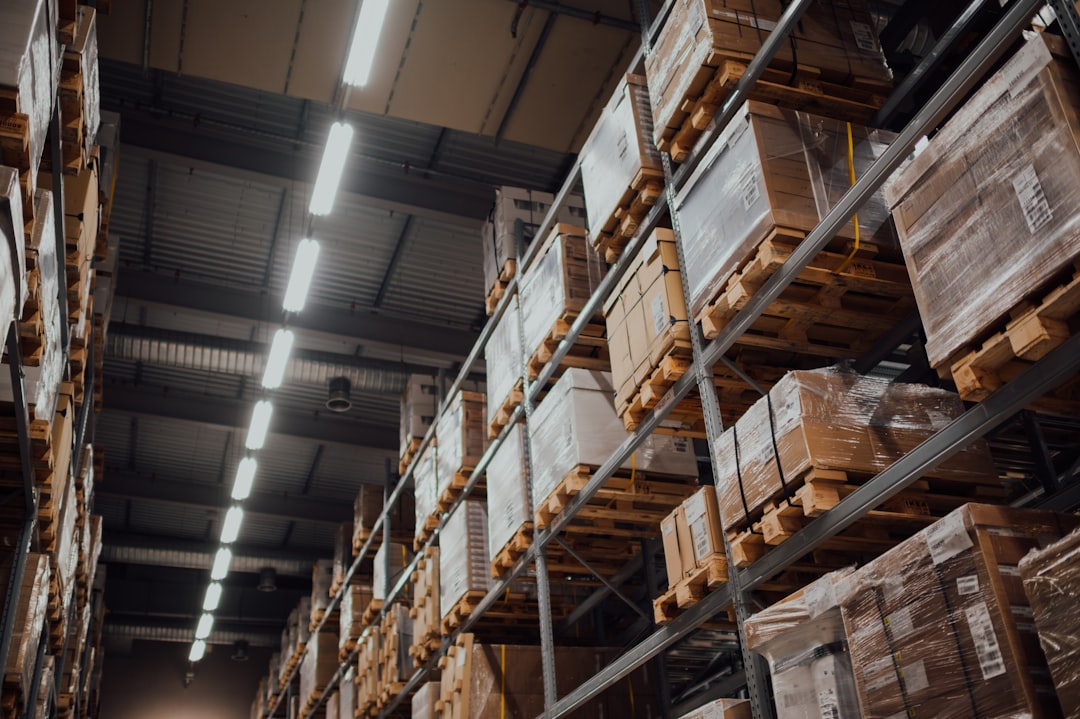
Finished cartons are visible; the sourcing choices, factory evidence, and quality records behind them still need to be verified. Repeated units also show why requirements and checks must remain consistent across a batch.
Photo by CHUTTERSNAP on Unsplash. Licensed under the Unsplash License.
Final next move
Name the decision that must be made next:
- Define the buying route: Go to Sourcing methods.
- Verify a proposed manufacturer: Go to Factory checks.
- Judge samples or production output: Go to Quality control.
Before following the selected link, record:
- The decision that is currently blocked.
- The evidence already available.
- The evidence still required.
Start with the section that resolves the current evidence gap, then follow its handoff to the next decision. Do not treat every sourcing activity as one undifferentiated task.
Sourcing information earns its value when it is verified, compared and turned into a decision.