
How to Choose Between Yiwu, Foshan and Shenzhen for a Sourcing Visit
Build an evidence-led fieldwork brief that matches Yiwu, Foshan or Shenzhen to your product, supplier questions, logistics risks and required purchasing evidence.
Executive introduction
Once a buying team has defined a product opportunity and completed initial desktop research, the next question is not simply which Chinese sourcing city is “best.” The useful question is which fieldwork model can resolve the project’s most important uncertainty. Yiwu supports dense comparison of ready-developed products and mixed assortments. Foshan is suited to examining materials, construction, finishes and factory-led production. Shenzhen is strongest when technical feasibility, components, prototyping and electronics manufacturing must be clarified.
A sourcing visit should therefore be designed backward from a commercial decision. Before booking travel, the team should know what it must observe, document or collect and what decision that evidence will support. The intended output is a completed fieldwork brief containing a weighted city-selection matrix, confirmed appointment plan, evidence targets, logistics questions and first-visit checklist.
This is not a generic ranking of Yiwu, Foshan and Shenzhen. Each can be the correct base for a specific buying task and a poor fit for another. The goal is to choose the city that can produce the highest-value evidence—not the longest list of meetings.
Define the decision the visit must resolve
Write a one-sentence fieldwork objective
Use one sentence to connect the destination, uncertainty and next commercial step:
We will visit [city] to verify [supplier/product uncertainty] before deciding [commercial next step].
For example:
- We will visit Yiwu to verify whether twelve low-volume household products can be combined into a commercially workable order before deciding whether to continue sampling.
- We will visit Foshan to verify whether the specified material, internal construction and finish can be reproduced consistently before deciding whether to audit a finalist.
- We will visit Shenzhen to verify whether an electronics concept can move from prototype discussion to a documented production plan before commissioning the next prototype.
Name the post-visit decision before departure. It should be concrete: reject the category, continue sampling, audit a finalist, negotiate a pilot order or prepare a purchase order. “Learn more about the market” is too broad to control appointments or evidence collection.
Separate useful fieldwork from general market exposure
Seeing more suppliers is not automatically better. A day of ten introductory conversations can produce less decision value than two meetings in which the team verifies materials, production responsibilities and packaging assumptions.
Prioritize questions that are difficult to resolve remotely:
- Is the contact a manufacturer, trader, market vendor or service intermediary?
- Do displayed products represent repeatable production capability?
- Do quoted materials and components match the controlled specification?
- Do minimum order quantities, packaging and lead times remain viable when products are combined?
- Who is responsible for production, inspection, testing, export documentation and corrective action?
Every appointment should address at least one named uncertainty. If a meeting has no defined evidence target, reconsider whether it belongs in the itinerary.
Establish the minimum evidence pack
The team should return with:
- Comparable written quotations based on the same specification version.
- Supplier-role verification and relevant business details.
- Labeled samples, swatches, components or controlled photographs.
- Notes that separate observed facts from supplier claims.
- Packaging dimensions, weights and consolidation assumptions.
- Agreed follow-up actions with owners and deadlines.
Business cards and showroom photographs alone are not decision-ready evidence. A usable evidence pack must allow colleagues who were not present to compare suppliers, identify gaps and make the planned commercial decision.
Use the city-selection matrix
Score each city against the buying task
Score each row from 1 to 5 using the actual project rather than city reputation. Weight the two or three criteria that could stop the order, such as manufacturing control, technical feasibility or logistics viability. Record a reason and supporting source for every high score.
| Selection criterion | Yiwu fieldwork model | Foshan fieldwork model | Shenzhen fieldwork model |
|---|---|---|---|
| Primary buyer task | Compare many ready-developed items, test assortments and examine low-volume combination options | Investigate material, construction, finish and production capability for factory-led products | Resolve technical feasibility, component choices, prototyping and electronics production questions |
| Typical product fit | Small commodities, accessories, gifts, household items and broad mixed-SKU ranges | Furniture, lighting, ceramics, sanitary ware, building materials and related manufactured goods | Consumer electronics, connected devices, hardware assemblies and products requiring rapid technical iteration |
| Best reason to visit | The team needs dense comparison across products and sellers before narrowing the range | The team must connect showroom claims to materials, workshops and production processes | The team needs direct technical exchanges among product, component and manufacturing participants |
| Visit rhythm | High-volume screening followed by slower verification of a short list | Appointment-led days organized around product clusters, showrooms and production sites | Short technical meetings, prototype reviews and tightly scheduled follow-ups |
| Supplier access | Easy initial access to many sellers; additional work is required to identify supplier role and production source | Better suited to pre-arranged access where facilities, samples and material options can be reviewed | Access depends heavily on prepared technical documents and reaching the appropriate engineering or product contact |
| Main evidence risk | Mistaking product availability or display breadth for manufacturing control | Mistaking a polished showroom or sample for repeatable factory capability | Mistaking a prototype demonstration for a production-ready, tested product |
| Logistics question to test | Can mixed products be inspected, packed, consolidated and documented economically? | How will bulky, fragile or made-to-order goods be packed, loaded and delivered? | How will batteries, components, testing requirements and product classifications affect export handling? |
| Evidence to bring home | Supplier-role map, comparable SKU list, MOQ ladder, consolidation plan and labeled samples | Material records, construction details, finish samples, facility observations and packaging calculations | Bill-of-material assumptions, prototype findings, test requirements, change log and production-responsibility map |
| Weak fit signal | The product requires deep process validation that cannot be established through market comparison | The team has no appointments and only wants to browse a wide, unrelated assortment | The buyer lacks a technical brief and expects suppliers to define the product from a vague concept |
| Likely post-visit decision | Finalize an assortment and identify which sellers require deeper verification | Advance a factory or product system into sampling, audit or pilot production | Approve a technical direction and commission the next controlled prototype or engineering step |
Calculate each city’s total by multiplying its project-specific score by the criterion weight. The number is a decision aid, not an automatic answer. Review whether the winning city also provides access to the evidence behind its score.
Apply three tie-breakers when scores are close
- Choose by the hardest uncertainty. Favor the city where the team can directly observe evidence that cannot be obtained reliably by email.
- Choose by decision value. Prefer the visit most likely to prevent an unsuitable sample, failed pilot order or misleading supplier shortlist.
- Choose by evidence density. Estimate how many complete, decision-ready records the team can produce each day rather than counting meetings alone.
Identify when the team is not ready to choose
Pause booking if:
- The specification is too vague to support comparable discussions.
- The team cannot explain what evidence would change its current decision.
- Facility or technical access is essential but appointments are unconfirmed.
- The itinerary combines unrelated product tasks requiring incompatible visit rhythms.
In these cases, complete another round of remote qualification. Travel cannot substitute for a controlled specification, targeted questions or access to the right people.
Run the appropriate evidence sprint in each city
Yiwu: map the assortment and expose the supplier chain
Begin with category and SKU screening rather than immediate price negotiation. Use a controlled comparison sheet to record the product reference, photographs, seller identity, stated supplier role, MOQ by color or design, sample availability, customization limits, packaging format, carton data, price basis and quotation validity.
Ask who controls production, inspection, packing, consolidation and export documents. Easy access to a broad product display does not demonstrate control over any of those functions. After initial screening, select a smaller group for deliberate verification instead of treating every market contact as a qualified supplier.
Take-home artifact: An assortment map showing which products can be combined, which contacts need further verification and which logistics assumptions remain unproven.
Foshan: connect visible samples to repeatable production
Organize appointment-led days around the relevant product cluster and manufacturing process. For each shortlisted item, trace the material specification, internal construction, assembly, finish control, critical dimensions, tolerances, production steps, outsourced work and protective packaging.
Where access is permitted, compare the showroom sample with current production or documented process evidence. The key question is not whether a supplier can show an attractive item, but whether it can reproduce the selected construction and finish consistently at the required scale. Record substitutions, outsourced processes and any difference between the displayed sample and the proposed order.
Take-home artifact: A product-construction dossier containing material records, finish samples, process observations, packaging calculations and unresolved factory-verification questions.
Shenzhen: turn a concept into a controlled technical record
Send the technical brief before requesting appointments. It should state intended function, use conditions, target dimensions, performance requirements, interfaces, connectivity, power requirements, target market, regulatory assumptions, prototype status, known failure points, volume, cost constraints and launch timing.
During each meeting, separate existing capability from proposed customization. Identify third-party component dependencies, prototype-only features and ownership of production testing and quality control. Maintain a versioned change log so suggestions from different meetings are not merged into the specification without review.
A working demonstration should not be treated as proof of production readiness. Record required tests, component availability, firmware or tooling dependencies, change-control responsibility and unresolved compliance questions.
Take-home artifact: A technical decision file containing prototype findings, component assumptions, test requirements, ownership boundaries and approved specification changes for the next round.
Build the first-visit plan
Complete the fieldwork brief before booking
| Brief field | Required entry |
|---|---|
| Buying decision due after the visit | The exact decision and deadline |
| Selected city | Yiwu, Foshan or Shenzhen |
| Reason for selection | Highest-value uncertainty the city can help resolve |
| Product scope | Specific categories, models or technical concept |
| Stop criteria | Evidence that would cause the team to reject or pause the opportunity |
| Priority appointments | Supplier, contact, purpose and confirmation status |
| Daily visit capacity | Realistic number based on the required evidence depth |
| Evidence owner | Team member responsible for records, files and sample labels |
| Logistics questions | Consolidation, packaging, loading, testing or export assumptions to verify |
| Required outputs | Quotations, samples, photographs, observations and follow-up documents |
| Post-visit review date | Date when evidence will be compared and the next decision made |
Daily capacity should reflect the work required. Yiwu screening may allow more initial contacts, but shortlisted sellers need slower verification. Foshan visits need time for movement between appointments and examination of materials or facilities. Shenzhen meetings may be short, but technical review, version control and same-day follow-up require protected working time.
First-visit planning checklist
- Define one primary buying decision for the trip.
- Select the city using the weighted matrix rather than product reputation alone.
- Freeze the specification version that suppliers will quote against.
- Prepare a common quotation template for every shortlisted supplier.
- Confirm each appointment’s purpose, address, contact and access expectations.
- Ask whether the meeting is at a market stand, showroom, office, workshop or production facility.
- Build travel time and evidence-recording time into each day.
- Assign roles for questioning, photography, note-taking and sample control.
- Prepare unique supplier and sample identification codes.
- Define which photographs require permission and which details are confidential.
- Bring reference samples, drawings, tolerances, color standards or technical files where relevant.
- List the supplier claims that must be corroborated rather than copied into notes.
- Prepare city-specific logistics questions: consolidation for Yiwu, bulky-goods handling for Foshan, or technical and export constraints for Shenzhen.
- Set a daily evidence review so missing records can be recovered before departure.
- Reserve time for follow-up meetings instead of filling every hour with introductions.
- Establish a secure shared folder with consistent file names.
- Schedule the post-visit decision meeting before the trip begins.
Use one evidence record for every appointment
Create one standardized record containing:
- Supplier identity and actual role.
- People present and their responsibilities.
- Products, facilities or processes observed.
- Claims made but not verified.
- Documents, files or samples received.
- Quote basis, validity and exclusions.
- Product changes discussed.
- Packaging and logistics assumptions.
- Risks, contradictions and unanswered questions.
- Agreed next action, owner and deadline.
Give each important statement one confidence label:
- Observed: The team directly saw the product, process or facility.
- Documented: A controlled record supports the statement.
- Supplier-stated: The supplier made the claim, but the team has not corroborated it.
- Still unverified: The question remains open.
This discipline prevents a polished presentation or confident verbal answer from acquiring the same evidential weight as a measured sample, controlled document or direct process observation.
Image gallery
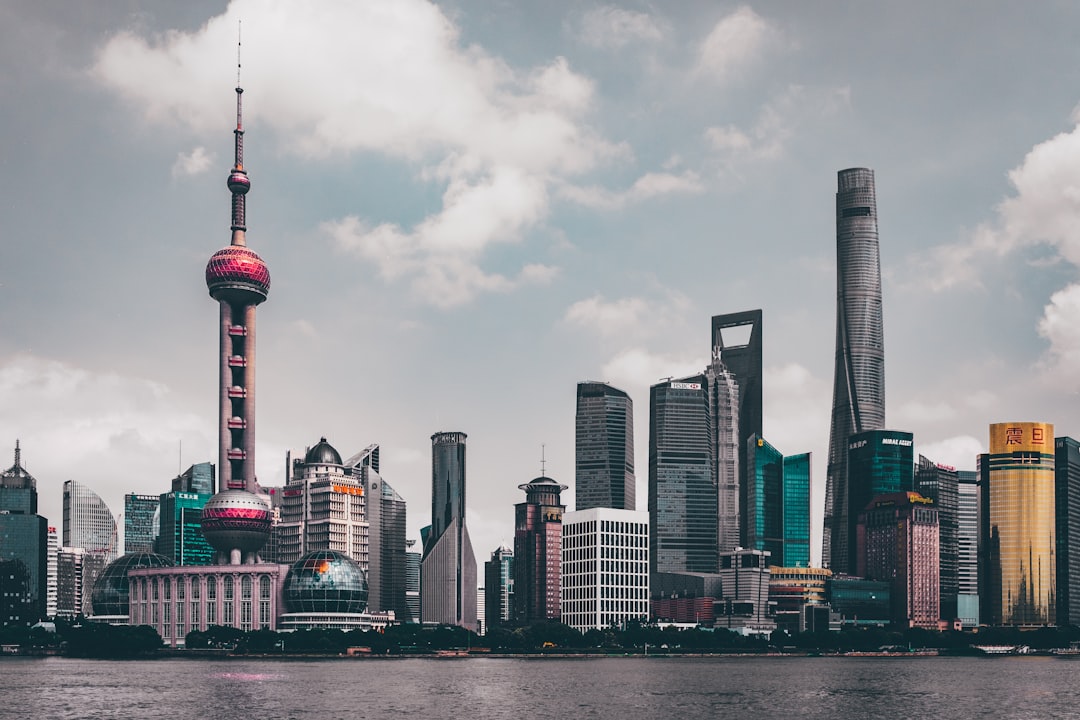
An urban business landscape introduces the planning context for evidence-led sourcing travel. This contextual photograph shows Shanghai and should not be presented as Yiwu, Foshan or Shenzhen. Photo by Hanny Naibaho on Unsplash. Licensed under the Unsplash License.
Final next move
Complete the weighted city-selection matrix with the product, sourcing, quality and logistics team. Choose the city that can resolve the project’s highest-cost uncertainty: Yiwu for controlled assortment comparison and mixed-order questions, Foshan for material and production-process validation, or Shenzhen for technical feasibility and electronics development.
Then produce a one-page fieldwork brief and send the same controlled information pack to every priority contact. Do not book the visit until the team can name the evidence it must bring home, the stop criteria it will apply and the purchasing decision that the evidence will support.
Sourcing information earns its value when it is verified, compared and turned into a decision.