
How to Prepare Supplier Conversations and Follow-Up for the Canton Fair
A practical system for setting product-group goals, routing supplier visits, recording booth conversations, managing samples, and verifying suppliers after the Canton Fair.
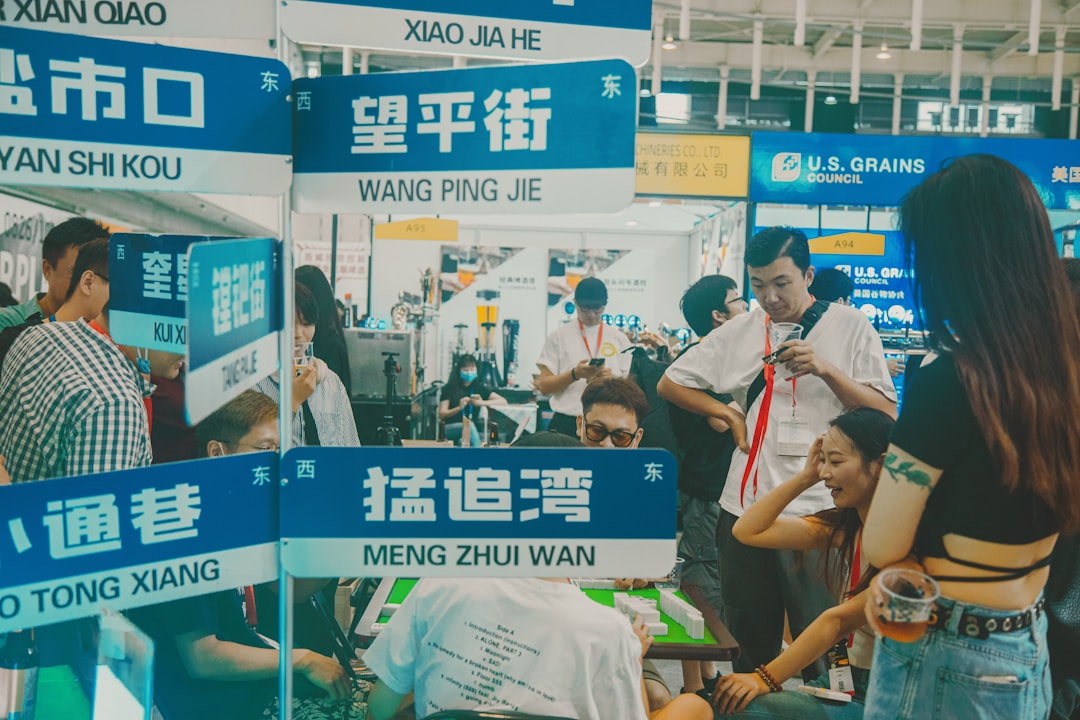
A productive Canton Fair visit is not measured by the number of catalogs collected or contacts scanned. The objective is to convert short booth meetings into comparable supplier records, qualified sample requests, and sourcing decisions supported by evidence. That requires clear product-group goals, disciplined questions, consistent notes, and a follow-up process that begins as soon as each conversation ends.
Prepare one sourcing brief for every product group, then use the same qualification framework with every relevant supplier. This makes it easier to compare MOQ, lead time, customization, certification claims, manufacturing capability, and sample quality without allowing an impressive display or persuasive salesperson to dominate the decision.
Event information can change. Confirm current directories, maps, schedules, and other operational details through official sources before building your route. The method below deliberately focuses on buyer preparation, booth execution, documentation, and post-fair verification rather than event logistics.
1. Set Product-Group Goals Before the Fair
Define a sourcing brief for each product group
Do not rely on one generic purchasing list. Create a one-page brief for each product group so that everyone on the buying team works from the same requirements.
Record:
- Product name, use case, and target customer.
- Must-have specifications and acceptable alternatives.
- Target price range and preferred pricing basis.
- Forecast order quantity and likely reorder volume.
- Target launch window.
- Packaging, labeling, branding, and customization needs.
- Destination market and applicable compliance requirements.
- Non-negotiable material, quality, performance, or safety criteria.
Classify requirements in three levels:
- Must have: The supplier cannot progress without meeting the requirement.
- Preferred: Valuable, but potentially open to negotiation.
- Exploratory: A feature, material, or variant worth investigating.
This distinction prevents a promising optional feature from distracting the team from a missing safety requirement, unsuitable material, or unworkable MOQ.
Assign measurable product-group goals
| Goal area | Question to answer | Practical target |
|---|---|---|
| Supplier discovery | How many credible manufacturers are needed? | Build a manageable shortlist of qualified options |
| Price validation | What must be compared? | Obtain pricing at several order quantities |
| Product development | Which customization options matter? | Assess material, color, logo, packaging, and tooling |
| Compliance | What evidence is required? | Collect relevant reports, certificates, and declarations |
| Sampling | Which sample stage is appropriate? | Existing sample first; custom sample after qualification |
| Risk reduction | Which uncertainties must be resolved? | Capacity, subcontracting, lead time, and traceability |
Build a supplier qualification scorecard
Score suppliers against the same weighted categories:
- Product fit.
- Manufacturing capability.
- MOQ flexibility.
- Price competitiveness.
- Lead-time suitability.
- Certification and compliance readiness.
- Quality-control process.
- Communication quality.
- Sample availability.
- Evidence that the exhibitor is the manufacturer or an authorized trading partner.
Define automatic disqualifiers before the fair. Examples include refusal to identify the production site, inability to explain key manufacturing steps, unsupported certification claims, conflicting material claims, or pressure to order before verification.
2. Plan Hall Routing and Run Better Booth Conversations
Route by sourcing priority
Plan the route around product value rather than walking convenience:
- Priority A: Pre-researched suppliers with strong product alignment.
- Priority B: Suppliers offering alternatives, new features, or useful benchmarks.
- Priority C: Exploratory booths visited after higher-priority work is complete.
Use the latest official event directory or map to place targets into logical walking clusters. Schedule demanding technical discussions when the team is most focused, and leave open blocks for unexpected discoveries, return visits, sample collection, and conversations that run longer than expected.
Avoid filling every available minute. Ten complete supplier records are more useful than dozens of unstructured scans, catalogs, and photographs that cannot later be linked to a specific product or claim.
Divide buying-team roles
For a team visit, assign clear responsibilities:
- Lead interviewer: Controls the sequence and asks qualification questions.
- Technical reviewer: Checks specifications, materials, components, performance claims, and production methods.
- Recorder: Captures answers, model numbers, sample details, booth references, and promised documents.
- Commercial reviewer: Examines MOQ, pricing tiers, payment assumptions, tooling, packaging, and lead time.
A solo buyer can use the same sequence. The important rule is to complete the booth record before moving to the next supplier.
Booth conversation card
Purpose: Keep each meeting focused, comparable, and short enough for a busy exhibition environment.
| Step | Questions to ask | Evidence or note to capture |
|---|---|---|
| Identify the business | Are you the manufacturer, a trading company, or both? Where is this product made? | Legal company name, production-site location, contact role |
| Confirm product fit | Which models are closest to our specification? What materials and components are used? | Model numbers, specification sheet, permitted product photos |
| Understand customization | Which dimensions, colors, materials, branding, and packaging can change? | Limits, tooling requirements, artwork format |
| Clarify MOQ | What is the MOQ for standard and customized versions? | MOQ by color, model, material, logo, and packaging |
| Check pricing logic | Which quantities change the price? What is included or excluded? | Pricing basis and written quotation request |
| Confirm lead time | What are the sample and production lead times? | Separate timelines and starting assumptions |
| Review capacity | What is normal capacity? Which processes are completed in-house? | Capacity claim, outsourced steps, peak-load constraints |
| Examine quality control | What checks occur for materials, production, and finished goods? | QC stages, testing equipment, defect process |
| Test certification claims | Which standards apply to this exact model and destination market? | Document title, issuer, number, model scope, validity shown |
| Discuss samples | Is the booth item a production sample? Can the same specification be supplied? | Sample code, cost, shipping terms, required modifications |
| Agree on follow-up | Who will send the quotation, documents, and sample details? | Named contact, promised deliverables, response point |
Ask stronger MOQ questions
A single MOQ number is rarely sufficient. Break it down by:
- Standard versus customized product.
- Color.
- Size or model.
- Material.
- Logo application method.
- Packaging configuration.
- Mixed-SKU or mixed-color possibilities.
Ask why the MOQ exists. It may reflect factory efficiency, raw-material purchasing, packaging print runs, or simply a negotiable sales policy. Understanding the reason helps reveal where flexibility may be possible without creating production risk.
Separate every lead-time stage
Ask suppliers to distinguish among:
- Existing-sample preparation.
- Custom-sample development.
- Tooling or mold development.
- Pre-production approval.
- Mass production.
- Testing and inspection.
- Packaging completion.
Also ask what resets the clock. Delayed artwork, specification changes, deposit timing, material availability, and failed sample approval can all change the quoted timeline. Record both the duration and the assumptions behind it.
Ask certification questions that reveal risk
Certification questions should concern the exact proposed model, not the supplier’s general industry experience. Confirm:
- The standard or regulation named.
- Product and model numbers covered.
- Manufacturer and production site identified.
- Issuing laboratory or certification body.
- Report or certificate number.
- Issue and validity information shown on the document.
- Whether material, component, or design changes affect coverage.
Request the underlying test report when a certificate does not provide enough detail. Booth logos, signs, and verbal assurances are leads for investigation—not proof of compliance.
3. Capture Booth Notes, Samples, and Evidence
Complete the booth note immediately
Assign every supplier a unique record ID. Before leaving the area, record:
- Displayed company name and legal name, if provided.
- Booth reference.
- Contact name, role, email, and messaging details.
- Product group and relevant model numbers.
- Manufacturer, trader, or mixed-business claim.
- Standard and custom MOQ.
- Sample and production lead times.
- Indicative pricing and its assumptions.
- Customization and tooling options.
- Certification claims.
- In-house and outsourced processes.
- Quality strengths and observed concerns.
- Promised documents or actions.
- Priority: high, medium, low, or reject.
Photograph products only with permission. Include the supplier record ID in each filename or caption so an image cannot later be assigned to the wrong booth.
Standard booth-note template
| Field | Entry |
|---|---|
| Supplier record ID | |
| Company and booth reference | |
| Contact person and role | |
| Product group and model | |
| Manufacturer/trader claim | |
| Must-have specifications met? | |
| MOQ: standard/custom | |
| Sample lead time | |
| Production lead time | |
| Price indication and basis | |
| Customization and tooling | |
| Certification claims | |
| In-house processes | |
| Outsourced processes | |
| Quality-control method | |
| Sample requested or collected | |
| Documents promised | |
| Red flags | |
| Next action and owner | |
| Qualification score |
Maintain a sample log
Every collected or requested sample needs a unique sample ID linked to the supplier record and exact model. Identify whether it is a booth display item, standard production sample, modified sample, or custom pre-production sample.
| Sample ID | Supplier ID | Model/specification | Status | Cost | Delivery owner | Tests required | Result |
|---|---|---|---|---|---|---|---|
| Collected/requested/pending |
Prevent confusion by requiring the same model number on the sample label, quotation, and specification sheet. Confirm material grade, dimensions, tolerances, finish, components, accessories, branding method, packaging, and performance requirements in writing. Never approve production solely from an unlabeled booth sample.
Verify supplier claims after the fair
Use the booth record as a list of claims to test. Verification should include:
- Confirming the legal company name and business status.
- Determining whether the company controls the stated production site.
- Verifying the contact’s company affiliation and authority.
- Comparing booth statements with the quotation and specification sheet.
- Reviewing certification documents for scope, model coverage, issuer, and authenticity.
- Checking whether proposed materials and components match the tested product.
- Requesting production-process and quality-control records.
- Requesting recent, relevant references where appropriate.
- Conducting a remote or on-site factory audit before a material commitment.
- Arranging independent sample testing when product or market risk justifies it.
- Defining pre-production, in-process, and pre-shipment inspections.
Treat inconsistencies as open verification questions. Do not dismiss them as minor administrative differences until they have been resolved.
4. Execute a Seven-Day Follow-Up Plan
Rank suppliers first
Classify suppliers by product group:
- A — Immediate follow-up: Strong fit and credible capability.
- B — Conditional follow-up: Potential fit, but important evidence is missing.
- C — Archive: Useful for benchmarking or future sourcing.
- Reject: Clear mismatch or unacceptable risk.
Record the reason for every ranking. This creates an auditable decision trail and prevents unrelated suppliers from being compared on the wrong criteria.
Seven-day follow-up plan
| Day | Action | Required output |
|---|---|---|
| Day 1 | Consolidate business cards, notes, photographs, catalogs, and sample records. Remove duplicates and correct attribution. | Clean supplier database with unique IDs |
| Day 2 | Score suppliers against the pre-fair criteria. Flag missing MOQ, lead-time, compliance, and manufacturing information. | Ranked A/B/C/reject list |
| Day 3 | Send personalized recaps to priority suppliers, restating the product, specification, quantities, and promised deliverables. | Written confirmation of requirements |
| Day 4 | Request structured quotations and evidence packages covering price tiers, MOQ variants, timelines, samples, and compliance documents. | Comparable commercial and technical files |
| Day 5 | Review responses for omissions and contradictions. Identify documents and claims requiring independent checks. | Gap list and verification questions |
| Day 6 | Hold clarification calls with the strongest candidates. Confirm manufacturing role, customization limits, sample plans, and verification access. | Updated shortlist and call notes |
| Day 7 | Select suppliers for samples, audits, testing, or deeper quotation work. Close or archive weak leads. | Approved next-stage supplier list |
Use a structured follow-up message
Use a subject line such as:
Fair follow-up — [product group / model / supplier record ID]
In the message:
- Thank the contact and identify the exact product discussed.
- Restate the required specification and expected quantities.
- Request price tiers and the relevant pricing basis.
- Ask for standard and custom MOQ by configuration.
- Separate sample, tooling, approval, and production lead times.
- Confirm packaging and customization requirements.
- Restate destination-market compliance needs.
- List the promised documents.
- Ask the supplier to identify any unmet requirement or assumption.
- Set one clear response point and assign an internal review owner.
Requested files may include the formal quotation, product specification, sample proposal, relevant test reports or certificates, quality-control information, and company and production-site details.
Convert replies into a supplier matrix
| Supplier | Product fit | MOQ | Sample lead time | Production lead time | Compliance evidence | Manufacturing verified? | Sample status | Next decision |
|---|---|---|---|---|---|---|---|---|
Update this matrix from written evidence rather than memory. Where a field remains uncertain, mark it as unverified instead of filling it with an assumption.
Image gallery
Prepare a clear question sequence and note-taking system before entering a crowded supplier exhibition.
Photo by Rikokill on Unsplash. Licensed under the Unsplash License.
Final next move
Select only a manageable group of top candidates for the next verification stage. Send each one a controlled specification sheet, a quotation template, a labeled sample request, a document checklist, and your proposed audit, testing, and inspection expectations.
Do not place a production order until the supplier identity, manufacturing role, product specification, compliance evidence, sample, lead-time assumptions, and quality plan have been independently checked to a level appropriate for the sourcing risk.
Sourcing information earns its value when it is verified, compared and turned into a decision.