
How to Visit a China Furniture Fair Around Materials, Suppliers, and Project Delivery
A practical method for organizing a China furniture fair visit by use case, materials, dimensions, construction, packing, supplier role, and factory follow-up.
A China furniture fair can expose a buyer to hundreds of products in a short period, but visual variety is not the same as sourcing progress. The most productive visit is organized around the intended use of each product and the evidence needed to move it toward specification, sampling, supplier verification, and production review.
The intended output should be a qualified product shortlist, comparable material and construction records, a map of possible supplier roles, controlled samples or sample requests, and a factory follow-up list. Booth discussions, quotations, displayed samples, lead-time statements, and company descriptions should all be treated as preliminary until supported by documents and later verification.
1. Build the Visit Plan Around Furniture Use Cases
Walking by visual style alone encourages inconsistent comparisons. Two chairs may look similar while using different frames, joints, foam, textiles, finishes, hardware, packing methods, or manufacturing processes. Organizing the visit by use case keeps the team focused on whether a product can meet the operating, maintenance, dimensional, and delivery requirements of the project.
Define the Project Before Entering the Fair
Record the application for each category: residential, hospitality, office, retail, restaurant, outdoor, institutional, or another contract use. Then define the conditions under which the furniture will operate:
- Expected frequency and intensity of use.
- Indoor or outdoor placement.
- Exposure to humidity, sunlight, temperature variation, or cleaning chemicals.
- User-weight and load expectations.
- Maintenance and cleaning access.
- Availability of replaceable covers, glides, hardware, or mechanisms.
- Expected replacement-part strategy.
Separate requirements into three levels:
- Must-have: safety, function, dimensions, material restrictions, and applicable compliance requirements.
- Target: preferred finish, price range, packing density, and customization direction.
- Optional: decorative details, alternate colors, and accessory upgrades.
This hierarchy prevents an attractive optional feature from distracting the team from a critical structural or dimensional problem.
Convert Room Schedules Into a Fair-Walking List
| Priority | Use case | Product category | Quantity range | Critical dimensions | Material direction | Main decision needed |
|---|---|---|---|---|---|---|
| A | Hotel guest room | Bedside table | Project estimate | Overall size and drawer clearance | Veneer or laminate over panel | Construction and finish sample |
| A | Restaurant | Dining chair | Project estimate | Seat height, width, and stackability | Solid wood or metal frame | Joint strength and upholstery |
| B | Office | Meeting table | Project estimate | Top size, cable access, and leg clearance | Engineered top with metal base | Knock-down structure and packing |
| B | Outdoor terrace | Lounge chair | Project estimate | Seat depth and arm height | Outdoor-suitable frame and textile | Weather-exposure evidence |
| C | Retail display | Shelving unit | Project estimate | Bay width, shelf load, and access | Metal, wood, or mixed construction | Assembly and replacement parts |
Replace these generic entries with the project room schedule, approximate quantities, required dimensions, and known material restrictions. Quantity assumptions do not need to be final, but they should be realistic enough to frame discussions about construction, tooling, packing, and supplier capability.
If several people are attending, assign clear roles:
- Product and design review.
- Materials and quality review.
- Commercial terms.
- Photography, sample logging, and document control.
Prepare a Consistent Booth Question Sequence
Ask comparable questions in the same order:
- What use case was this model designed for?
- Which components are made in-house, outsourced, or purchased?
- What are the exact materials and grades by component?
- Which dimensions can change without structural redesign?
- How is the product joined, reinforced, finished, and assembled?
- What is the standard packing method?
- What customization has previously reached production?
- What supporting evidence can be reviewed after the fair?
- Which facility would manufacture this item?
- Who would own engineering, sampling, production, inspection, and export coordination?
Record answers as supplier statements rather than confirmed facts. This distinction matters when later factory observations, drawings, specifications, or test records differ from a booth discussion.
2. Inspect Materials, Dimensions, Construction, and Packing
Identify Materials by Component
Avoid relying on broad labels such as “premium,” “eco-friendly,” “solid,” or “high quality.” Break the product into a component-level bill-of-materials view:
- Structural frame.
- Panels and surfaces.
- Veneer, laminate, paint, powder coating, plating, or other finish.
- Foam and upholstery.
- Hardware and mechanisms.
- Adhesives and fasteners.
- Glides, feet, casters, and protective parts.
Also identify whether the displayed item is a production model, prototype, show sample, or customized display piece. A fair sample may not represent normal production construction or finish control. Flag material claims that require specifications, supplier declarations, traceability records, or relevant test evidence.
Measure the Product and Its Interfaces
Capture dimensions that affect how the product will be used:
- Overall width, depth, and height.
- Seat height and seat depth.
- Tabletop height and thickness.
- Drawer and door clearance.
- Arm height.
- Leg and knee clearance.
- Shelf spacing and usable internal dimensions.
Also capture delivery-related data where available:
- Assembled dimensions.
- Knock-down component dimensions.
- Proposed carton dimensions.
- Gross and net weight.
- Number of cartons per unit.
When permitted, photograph the measuring tape in position so the measurement retains context. Booth measurements remain preliminary until checked against controlled drawings and production specifications.
Examine Construction Where Failures Usually Begin
Inspect the areas that often reveal how the product is engineered:
- Frame joints and reinforcement.
- Weld quality and metal finishing.
- Screw positions, threads, and insert types.
- Edge banding and exposed panel edges.
- Drawer slides, hinges, locks, and moving mechanisms.
- Upholstery seams, piping, tension, and underside finishing.
- Alignment, wobble, gaps, and finish consistency.
- Replaceability of hardware and wear components.
Ask whether construction changes between sample development and volume production. Request an exploded drawing, section detail, or assembly instruction where relevant. Do not perform destructive checks or improvised load tests without explicit permission.
Review Packing as Product Engineering
Packing affects damage risk, assembly labor, shipment density, finish protection, and component control. Determine whether the item is shipped fully assembled, partly assembled, flat-packed, nested, or stacked.
Review how the proposed pack protects:
- Corners and exposed edges.
- Delicate finishes.
- Glass, stone, ceramic, and mirrors.
- Upholstery and textiles.
- Hardware and loose fittings.
Check for possible internal movement, abrasion, moisture exposure, missing labels, and unprotected hardware. Ask about carton specifications, component identification, assembly instructions, and spare fittings. Record the proposed method, but verify it later through a packing specification, sample-pack review, and an appropriate transit-testing plan.
Use a Furniture Sample Log
| Sample ID | Product/use case | Booth contact reference | Material and finish | Key dimensions | Construction notes | Packing status | Decision supported | Evidence missing | Sample location/owner | Follow-up action |
|---|---|---|---|---|---|---|---|---|---|---|
| CHR-01 | Restaurant dining chair | Company/contact card ID | Frame, foam, textile, finish code | W × D × H; seat height | Joint type, reinforcement, glides | Not reviewed | Comfort and finish direction | Frame drawing and material specifications | Buyer sample room | Request specification set |
| TBL-01 | Office meeting table | Company/contact card ID | Top substrate, surface, metal base | Top size; leg clearance | Knock-down base and inserts | Carton concept discussed | Assembly approach | Packing drawing and hardware list | Digital record only | Review factory capability |
| CAB-01 | Hotel bedside cabinet | Company/contact card ID | Panel, veneer or laminate, hardware | Overall size; drawer clearance | Edge detail, back panel, slides | Carton viewed | Appearance and function | Finish-control sample | Project team | Request revised sample |
| OUT-01 | Outdoor lounge chair | Company/contact card ID | Frame, coating, textile | Seat and arm dimensions | Welds, drainage, replaceable cover | Not reviewed | Preliminary suitability | Exposure and material evidence | No sample taken | Hold pending documentation |
Give every swatch, hardware piece, finish chip, prototype, and physical sample a unique ID. Photograph the ID beside the relevant product and use it in file names, quotation requests, and follow-up messages.
Mark the purpose of each sample:
- Visual reference only.
- Material-control candidate.
- Construction prototype.
- Pre-production reference.
- Not suitable for approval.
A sample without a defined decision purpose is likely to create confusion. Booth location, memory, catalogs, and messaging history should not serve as the primary sample-control system.
3. Compare Supplier Roles Before Discussing Project Delivery
Identify the Role Behind Each Booth
Clarify both the legal party and the operational parties represented. Ask which entity would:
- Sign the contract and issue the invoice.
- Develop and control drawings.
- Produce samples.
- Manufacture each product.
- Purchase outsourced materials.
- Conduct internal quality control.
- Prepare export documentation.
- Coordinate mixed-category orders.
Terms such as “factory,” “manufacturer,” and “direct” are statements to verify, not conclusions. One company may perform several roles, while another may coordinate independent factories. Either model can be workable if responsibilities, technical control, commercial relationships, and reporting lines are transparent.
Supplier-Role Comparison Table
| Supplier role | Potential fit | Questions to ask | Evidence to verify | Main coordination risk |
|---|---|---|---|---|
| Manufacturer | Repeated orders in a focused category | Which processes are in-house, and which are subcontracted? | Business scope, facility review, process flow, equipment, and production records | Limited capability outside the core category |
| Trading company | Multiple categories or access to several factories | How are factories selected and controlled? Who owns technical decisions? | Contracting entity, named production sites, QC procedures, and reference documents | Reduced visibility into the actual producer |
| Manufacturer-exporter | Category production with direct export handling | Which export and project functions are internal? | Factory capability, export workflow, and technical-team responsibilities | Commercial flexibility may exceed production flexibility |
| Sourcing company or agent | Multi-supplier coordination and local follow-up | How are fees, conflicts, inspections, and supplier disclosure handled? | Service scope, fee structure, reporting format, and supplier transparency | Ambiguous roles or misaligned incentives |
| Design or engineering partner | Custom products requiring development | Who owns drawings and revisions? How is manufacturability reviewed? | Design scope, revision control, and technical deliverables | Design decisions may not transfer cleanly into production |
| Consolidator or logistics coordinator | Mixed shipments and packing coordination | Who checks carton data, receiving condition, and shipment marks? | Warehouse process, receiving reports, and packing controls | Product-quality responsibility may be outside its scope |
Compare role clarity separately from price. Responsibilities should later be written into the sourcing workflow, technical-document process, inspection plan, and contract structure.
Score Suppliers Against Actual Project Needs
| Evaluation area | Suggested question | Score |
|---|---|---|
| Product fit | Does the supplier routinely work with the required category and use case? | 1–5 |
| Material control | Can it define and trace critical materials and finishes? | 1–5 |
| Engineering | Can it issue controlled drawings, revisions, and assembly details? | 1–5 |
| Manufacturing visibility | Are in-house and outsourced processes clearly identified? | 1–5 |
| Quality system | Are inspection points and defect-handling procedures documented? | 1–5 |
| Packing capability | Can packing be specified, sampled, and verified? | 1–5 |
| Communication | Are responses precise, consistent, and assigned to named owners? | 1–5 |
| Project coordination | Can responsibilities across categories and factories be mapped? | 1–5 |
Use scoring to prioritize investigation, not to grant approval automatically. Maintain a separate red-flag list so that a serious issue—such as an unidentified production site or uncontrolled drawing revisions—is not hidden by a high total score.
4. Convert Fair Findings Into Factory Follow-Up and Delivery Controls
Run a Same-Day Evidence Review
At the end of each day, match photographs, business cards, catalog pages, notes, and samples. Rename files with the supplier or sample ID and separate the records into:
- Confirmed observations.
- Supplier statements.
- Documents received.
- Open questions.
- Items requiring factory verification.
Remove products that do not fit the intended use, dimensions, construction, or material direction, regardless of their visual appeal. Send concise clarification requests while the conversation remains recent.
Create a Shortlist With Verification Gates
- Product-fit gate: Confirm the use case, workable dimensions, and appropriate material and construction direction.
- Supplier-role gate: Identify the contracting, manufacturing, engineering, quality, and export parties.
- Technical-document gate: Review drawings, specifications, finish references, and preliminary packing information.
- Factory-verification gate: Examine relevant processes, quality controls, capacity logic, and subcontracting.
- Sample gate: Document the sample’s purpose, revision status, and acceptance criteria.
- Commercial gate: Compare quotation scope, exclusions, tooling, sampling, packing, and payment terms on the same specification basis.
Passing one gate does not imply that the supplier or product has passed the others.
Prepare the Factory Follow-Up Checklist
Verify the facility proposed for each shortlisted item. Select checkpoints according to the product rather than relying on a generic factory tour.
Review, as applicable:
- Incoming-material controls.
- Material storage, labeling, and traceability.
- Cutting, machining, welding, finishing, upholstery, and assembly.
- Outsourced-process controls.
- Drawing and revision management.
- In-process and final inspection points.
- Sample retention and finish control.
- Rework and defect records.
- Packing operations and finished-goods storage.
Record conflicts between fair statements and factory observations. Resolve them before relying on quotations, specifications, or production assumptions.
Link Samples to Controlled Project Documents
Create a controlled product file containing:
- Approved drawing.
- Component-level material specification.
- Finish code or physical control reference.
- Hardware list.
- Construction details.
- Packing specification.
- Label and shipping-mark requirements.
- Inspection criteria.
- Revision history.
Keep design approval, material approval, construction approval, packing approval, and production authorization as separate decisions. Schedules and delivery outcomes depend on verified capacity, approved specifications, material availability, quality controls, logistics, and written commercial terms; they should not be inferred from a fair conversation.
Use a Post-Fair Action Checklist
- Every shortlisted product has a use-case owner.
- Product and sample IDs match all photographs and notes.
- Dimensions include units and measurement context.
- Materials are described by component.
- Construction questions and open risks are logged.
- Packing methods and missing evidence are recorded.
- Contracting and manufacturing entities are distinguished.
- Engineering, production, QC, and export roles are assigned.
- Factory follow-up requirements are prioritized by product risk.
- Every sample has a stated decision purpose.
- Quotations use the same specification basis.
- Unverified statements remain marked as pending.
- No delivery commitment is treated as confirmed without supporting review and written agreement.
Image gallery
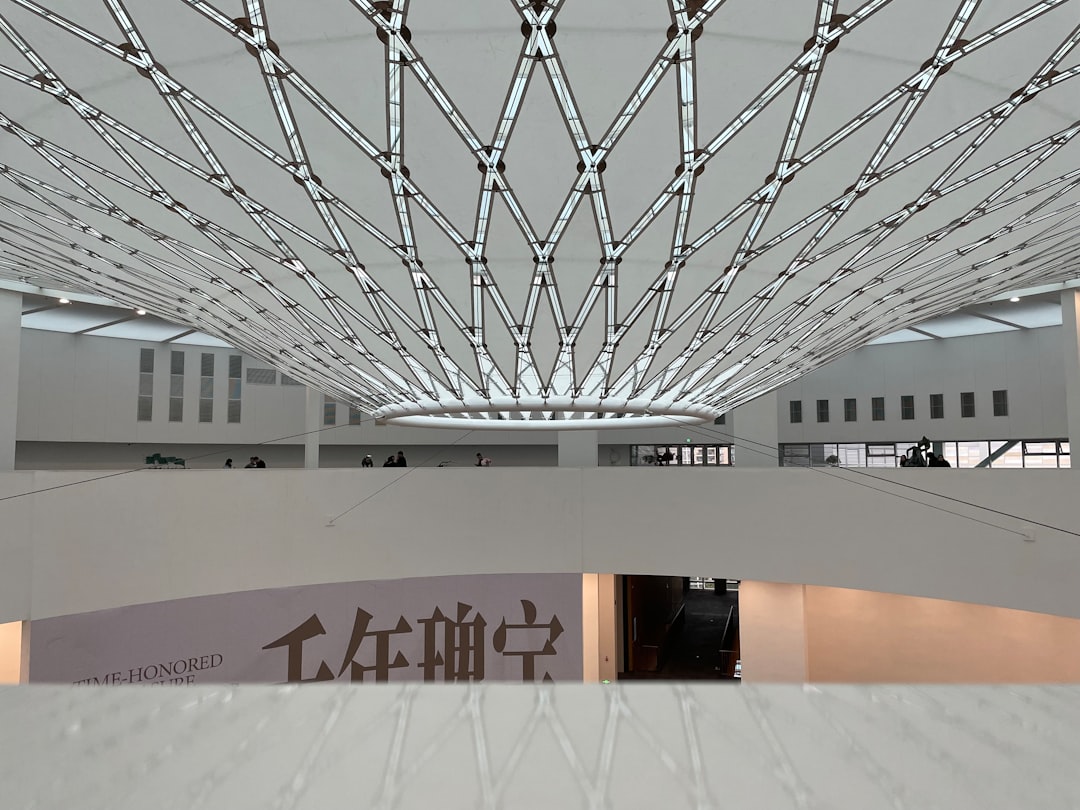
A large illuminated interior reflects the challenge of navigating a visually dense sourcing environment while keeping attention on product evidence and follow-up requirements.
Photo by Diosming on Unsplash. Licensed under the Unsplash License.
Final Next Move
Turn the Plan Into a Working Fair Pack
Create one shared workbook with four linked tabs:
- Use-case and product priorities.
- Furniture sample log.
- Supplier-role comparison.
- Factory follow-up actions.
Assign supplier and sample IDs before the visit so every photograph, contact, quotation, document, and physical sample can be connected. Brief the team to collect information in the same sequence: use case, materials, dimensions, construction, packing, supplier role, and missing verification.
End each fair day by selecting only the products and suppliers that justify a documented next step. The next step may be a specification request, revised sample, packing review, factory visit, or role clarification—but it should always be tied to evidence that is still needed.
Sourcing information earns its value when it is verified, compared and turned into a decision.