
How to Manage Fast Apparel Sampling in Guangzhou Without Losing Production Control
A practical control framework for accelerating apparel samples in Guangzhou while protecting patterns, materials, sizing, bulk production, replenishment, packing, and approval records.
Content path: O2O Sourcing > Industrial Hubs > Guangzhou Apparel
Guangzhou’s concentration of fabric markets, trim vendors, pattern makers, sample rooms, processing specialists, and sewing factories can shorten apparel development cycles. Buyers can often source alternatives, revise patterns, replace trims, or arrange specialist work without moving a project across distant regions. That speed is useful only when every decision remains traceable.
The operating goal is not simply to obtain a sample quickly. It is to establish documented control over the block, pattern, fabric, trims, size chart, grading, sample stages, MOQ, packing, and production handover. Each accelerated activity should end at a named approval gate, with evidence that can be used by the bulk factory and later for replenishment.
A fast, accurate sample demonstrates development capability only. It does not guarantee stable bulk quality, capacity, delivery, workmanship, or material consistency. Sample-room methods, locally available sample yardage, and urgent handwork may not be repeatable on a production line.
Build a Guangzhou Sampling Plan Around Control Gates
Define “fast” before contacting suppliers
Set a separate target lead time for material sourcing, pattern preparation, the first prototype, fit correction, the size set, the pre-production sample, and bulk-material approval. State whether each target uses calendar days or working days.
The schedule should account for fabric-market hours, courier cutoffs, dyeing or printing time, sample-room workload, public holidays, and outsourced processes. Activities may run in parallel when their risks are understood—for example, preliminary trim sourcing can begin during pattern work—but bulk cutting must not begin before the required written approvals.
Assign a named approval owner and timestamp to each of these gates:
- Block and pattern
- Fabric quality and color
- Trims and labels
- Fit, measurements, and construction
- Grade rules
- Pre-production sample
- Packing method
- Bulk cutting release
Silence, verbal remarks, and chat reactions should not count as approval. Require a revised sample when a change affects fit, appearance, construction, performance, cost, or packed dimensions.
Map responsibility across the local network
Identify who controls each step: the sourcing agent, merchandiser, pattern maker, sample room, fabric supplier, dye house, printer, trim vendor, grading technician, bulk sewing factory, packing supplier, and inspection provider. Record subcontractors used for embroidery, washing, pleating, bonding, printing, or special finishing.
Confirm whether the sample room and bulk factory are the same operation. If they are different, create a formal handover package containing the approved patterns, construction notes, bill of materials, grade rules, sample comments, and sealed reference sample. Do not assume that information held by a Guangzhou merchandiser automatically reaches production-line supervisors.
Lock Product Inputs Before Accelerating Samples
Control blocks and patterns
Start from one identified source: a buyer-supplied block, factory block, reference garment, or newly developed pattern. Give every pattern a version number and date, and record its base size, seam allowances, shrinkage allowance, grain direction, matching points, and construction annotations.
Keep digital pattern files and printable plots when possible. Freeze the approved pattern before marker making, and prohibit undocumented adjustments between sample approval and bulk cutting. If the block is proprietary, state who owns it and whether the supplier may reuse it.
Approve fabrics for bulk repeatability
A market name or small swatch is not a complete fabric specification. Record:
- Fiber composition
- Woven construction or knit structure
- Weight and tolerance
- Usable width
- Stretch and recovery
- Color standard
- Finish and hand feel
- Shrinkage
- Pilling or abrasion requirements
- Required colorfastness and performance tests
Label each sample as using exact bulk fabric, available sample yardage, or substitute fabric. Locally available yardage may accelerate development, but it can drape, shrink, stretch, sew, or wash differently from the eventual bulk lot. Approve and test the bulk lot separately, even when the prototype appears correct. Reserve sufficient material for repeat samples, testing, and retained references.
Create a trim control sheet
Assign a unique code to every zipper, button, snap, elastic, thread, label, drawcord, interlining, hook-and-loop component, and packaging accessory. Record the supplier, material, dimensions, color, finish, logo details, compliance requirements, and whether it is stock or custom.
For custom trims, confirm tooling costs, setup charges, MOQ, lead time, and replenishment availability. Seal and retain approved trim samples so inspectors and production teams have a physical comparison standard.
Make the size chart measurable
Use diagrams that define every point of measurement. State whether the garment is measured flat or around the body, relaxed or stretched, before or after washing, and fastened or open. Apply tolerances by measurement point rather than using one blanket tolerance.
Include the intended fit, target ease, and fit-model or mannequin reference. Require an actual-measurement report with every fit-related sample. Resolve contradictory dimensions before grading; otherwise, a supplier may select whichever measurement is easiest to achieve.
Check MOQ before approving the design
Confirm MOQ separately by style, color, size, fabric dye lot, print or embroidery artwork, custom trim, label, and packaging item. Ask whether each MOQ applies to sampling, the initial bulk order, or replenishment.
Record below-MOQ surcharges and design risks such as excess branded trims, mixed fabric lots, or packaging inventory. A supplier that produces one sample quickly may still be unable to manufacture a small bulk order economically or consistently.
Run Sample Stages as Documented Decisions
Use only the sample stages needed for the product, but define the purpose of each stage before work begins:
- Development or prototype sample: Tests silhouette, construction concept, and feasibility. Any substitute material must be declared.
- Fit sample: Checks balance, ease, movement, measurements, and construction.
- Revised fit sample: Verifies that corrections were implemented without creating new defects.
- Size-set sample: Tests written grade rules in selected smaller, base, and larger sizes.
- Salesman, photo, or showroom sample: Supports marketing but is not production authorization.
- Pre-production sample: Combines bulk-intent fabric, trims, labels, construction, finishing, and packing details.
- Top-of-production sample: Comes from the live production line and is compared with the sealed pre-production reference.
- Shipment or retention sample: Provides a traceable reference for claims and repeat orders.
Apparel Sample-to-Production Control Table
| Stage | Main control objective | Required inputs | Evidence to retain | Approval gate | Risk if rushed |
|---|---|---|---|---|---|
| Product brief | Define technical and commercial scope | Tech pack, quantity, price target, delivery window | Dated brief and supplier acknowledgment | Scope accepted | Supplier fills gaps independently |
| Block and first pattern | Establish shape and construction base | Block source, base size, seam allowances, fit intent | Numbered pattern and change log | Pattern released for sampling | Untracked changes reach bulk |
| Prototype | Test design feasibility | Initial pattern, sample fabric, preliminary trims | Photos, construction notes, substitution list | Concept approved or revised | Non-repeatable materials or methods are hidden |
| Fit sample | Confirm fit and measurements | Size chart, measurement method, fit criteria | Measurement report, marked photos, comments | Written fit decision | Balance and measurement conflicts remain |
| Revised fit | Verify corrections | Updated pattern and consolidated comments | Before-and-after comparison | Corrected base size approved | An obsolete pattern is reused |
| Size set | Validate grading | Approved base pattern and grade rules | Reports and photos for selected sizes | Grade rules approved | Extreme sizes fit poorly |
| Fabric and trim approval | Confirm production-intent materials | Lab dips, strike-offs, bulk swatches, trim cards | Signed swatches, tests, supplier and lot records | Materials approved | Bulk color, shrinkage, hand feel, or performance differs |
| Pre-production sample | Combine approved specifications | Final pattern, bulk-intent materials, labels, packing details | Sealed sample, final tech pack, approval record | Written release before cutting | Bulk begins with unresolved substitutions |
| Pilot or first output | Test line execution | PP sample, operation breakdown, QC plan | Inline report and defect photos | Corrections closed | Sample-room quality is not reproduced |
| Top of production | Verify actual output | Units from the active line | TOP sample and measurement report | Continue, correct, or hold | Variation is discovered too late |
| Final inspection and packing | Verify garments, assortments, and cartons | Inspection standard and packing manual | Inspection report and packing photos | Shipment release | Correct garments ship in incorrect packing |
| Replenishment | Repeat the approved product | Archived sample, BOM, patterns, prior records | New lot approvals and comparison report | Repeat order released | New lots or workshops create unnoticed variation |
Consolidate comments and references
Use one controlled comment sheet per sample round. Number every comment and connect it to a photograph or measurement point. Mark each item as accepted, must change, supplier to confirm, or deferred. The supplier should respond to every numbered point before making the next sample.
Avoid separate instructions from designers, buyers, and agents across multiple chat threads. Highlight every request that changes cost, MOQ, lead time, or manufacturability.
Seal approved physical samples and label them with the style, color, size, sample stage, pattern version, approval date, and approver. Store high-resolution front, back, inside, detail, label, and measurement photographs. Rejected samples should be archived or visibly marked so they cannot become accidental production references.
Carry the Controls Into Bulk Production
Separate sample-room performance from factory capability
Audit the intended bulk factory rather than relying on its showroom or sample room. Verify relevant product experience, available lines, current workload, subcontracting, cutting and finishing controls, inspection procedures, and capacity for the required window.
Ask how sample-room construction methods will be transferred to line operators. Complex products may need a pilot run, early inline inspection, or first-output review. A fast, accurate sample is useful evidence, but it is not proof of stable bulk production.
Freeze grading before cutting
Approve grade increments by measurement point and review at least one smaller and one larger size in addition to the base size. Check proportion, pocket and trim placement, neckline shape, armhole and sleeve balance, rise, seat shape, and print or embroidery placement.
Do not let automatic grading rules override the product’s fit intent. Freeze the approved graded pattern set before marker making and cutting.
Plan replenishment from the first order
Record which fabrics, trims, labels, and packing materials can be reordered and which are seasonal or market-dependent. Retain supplier details, color standards, dye-lot records, trim codes, patterns, grading files, approved samples, test reports, and inspection results.
A repeat order still requires new bulk-lot approval. Compare its measurements, color, hand feel, shrinkage, and workmanship with the archived reference. If production moves to another workshop, define which samples, audits, and approvals must be repeated.
Approve packing before finishing
Add a packing specification to the tech pack covering:
- Folding method
- Button or zipper position
- Tissue, inserts, and protective materials
- Polybag dimensions and warnings
- Barcode and sticker placement
- Size and color identification
- Carton dimensions and strength
- Assortment ratios
- Carton marks
- Maximum carton weight
Request a packed sample or mock-up. Check whether folding creates pressure marks, deformation, moisture risk, or unnecessary shipping volume. Confirm packing-material MOQ and replenishment availability, then require carton photographs and assortment checks before shipment release.
Keep communication records auditable
Chat applications are useful for speed, but final decisions belong in controlled documents. Maintain a master tech pack, bill of materials, sample tracker, comment sheets, cost and MOQ change log, approval register, pattern-version log, inspection reports, and packing approval.
Use the style number, version, date, owner, and status in file names. Summarize calls and factory visits in writing on the same day, and obtain explicit supplier acknowledgment. Do not approve color, hand feel, fit, or construction solely from compressed phone images.
Pre-Bulk Control Checklist
- Intended bulk factory and subcontractors are identified.
- Block source and current pattern version are confirmed.
- Size chart includes measurement methods and point-specific tolerances.
- Grade rules and representative size-set samples are approved.
- Bulk fabric quality, color, shrinkage, and performance are approved.
- Trims are coded, approved, and available at the required MOQ.
- Sample substitutions are documented and closed.
- Pre-production sample uses bulk-intent materials.
- Bill of materials matches the approved sample.
- Cost, quantity, MOQ, and delivery changes are recorded.
- Packing, labels, assortments, and carton marks are approved.
- Inline, final-inspection, and shipment-release responsibilities are assigned.
- Replenishment records and retained references are archived.
- Written approval is issued before bulk cutting.
Image gallery
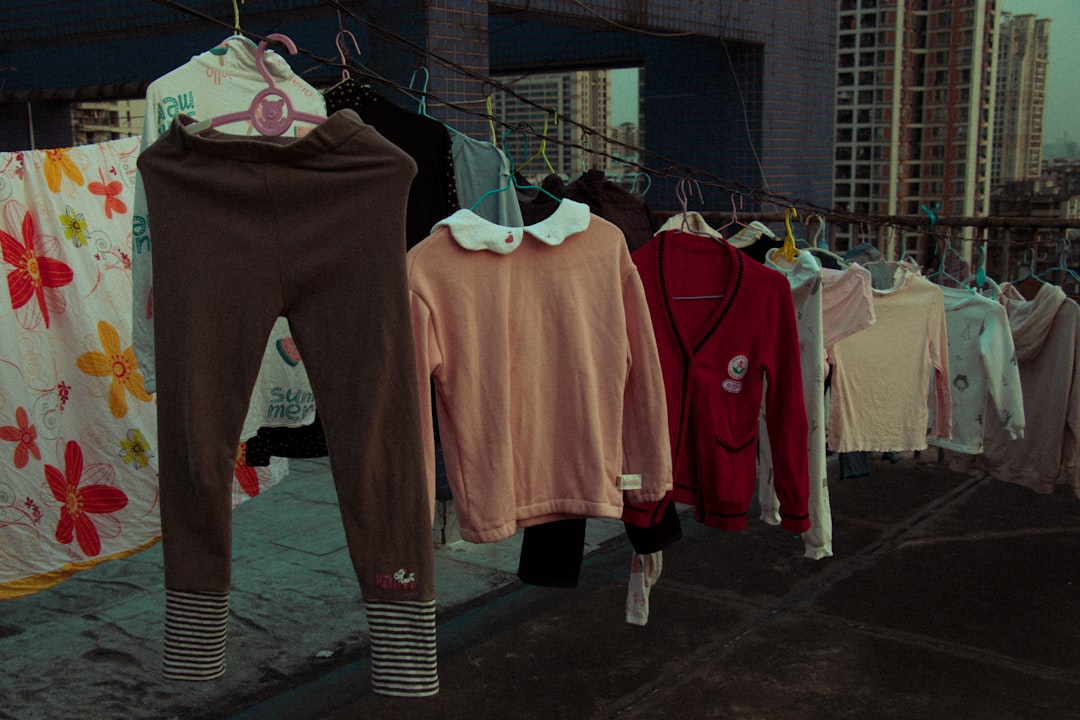
Guangzhou’s apparel ecosystem can support rapid development, but every sample still needs a controlled path into bulk production.
Photo by Iamsabrinka on Unsplash. Used under the Unsplash License.
Final Next Move
Send a controlled sampling pack before requesting speed
Prepare one supplier-ready package containing:
- Product brief and target timeline
- Block or reference-garment instructions
- Version-controlled tech pack
- Fabric and trim specification sheets
- Size chart with diagrams and tolerances
- Required sample stages and approval owners
- MOQ and replenishment questions
- Packing requirements
- Communication and file-naming rules
- Sample-to-production control table
Ask the Guangzhou supplier to return a stage-by-stage schedule, named responsible parties, declared material substitutions, MOQ constraints, subcontracting details, intended bulk-factory capacity, and a list of approvals required before cutting.
Release the first sample only after both parties acknowledge the same scope. Keep bulk production conditional on bulk-material approval, pre-production confirmation, grading control, capacity verification, packing approval, and production inspection—not on sample speed alone.
Sourcing information earns its value when it is verified, compared and turned into a decision.