
How to Prepare Supplier Conversations and Follow-Up for the Canton Fair
A practical system for setting product-group goals, planning hall routes, recording booth conversations, controlling samples, and verifying suppliers after the Canton Fair.
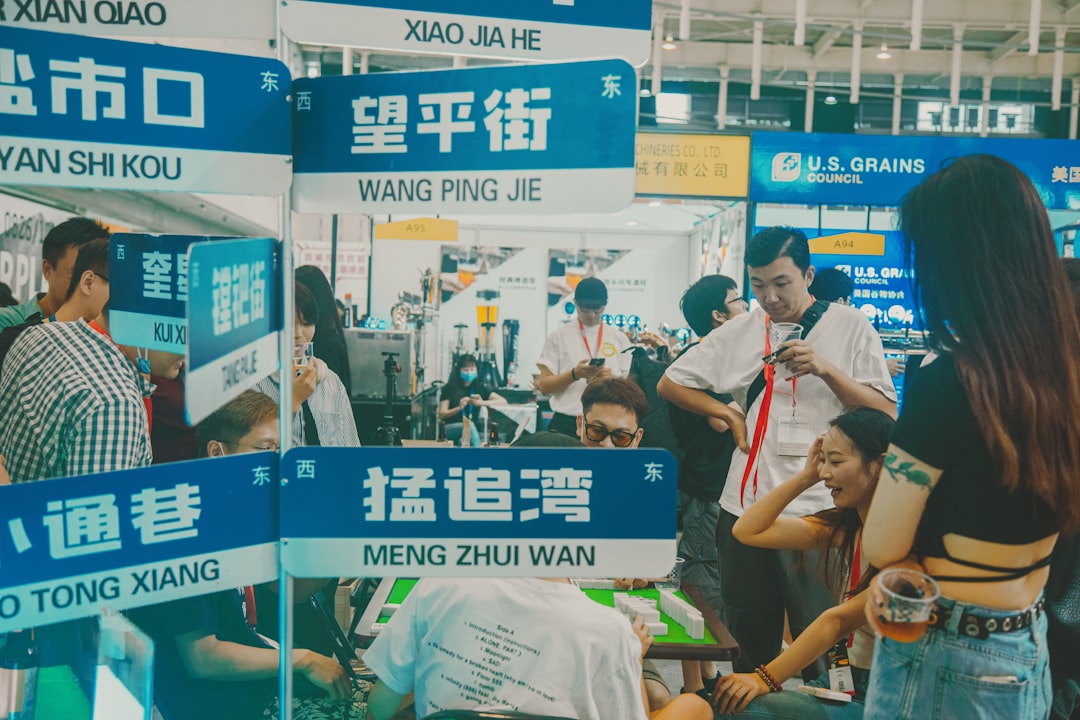
The Canton Fair is a high-volume supplier discovery environment. The objective is not to collect the most business cards or catalogs; it is to leave with a documented shortlist of suppliers whose product fit, commercial terms, compliance evidence, and production claims can be verified.
Effective preparation turns a brief booth meeting into structured sourcing evidence. Buyers should know which product requirements matter, how they will compare suppliers, what questions they must ask about MOQ and lead time, and which documents or samples will be needed after the conversation. Consistent records also prevent attractive displays or confident sales claims from overriding the sourcing brief.
This guide focuses on product-group goals, routing logic, booth notes, supplier conversations, samples, and post-fair verification. It does not depend on specific dates, phase assignments, venue details, or registration procedures. Confirm current exhibitor and routing information through applicable official sources when building your working plan.
Image gallery
Structured conversations and concise records help buyers work effectively in a busy supplier-discovery environment. Photo by Rikokill on Unsplash. Available under the Unsplash License.
1. Set Product-Group Goals Before Speaking to Suppliers
Build a sourcing brief for each product group
Prepare a separate one-page brief for every product group instead of presenting suppliers with a generic purchasing request. A focused brief makes it easier to identify the right model, compare equivalent quotations, and stop conversations quickly when a critical requirement cannot be met.
Each brief should record:
- Product name, intended use, and target customer.
- Essential dimensions, materials, components, and performance requirements.
- Target order quantity and acceptable MOQ range.
- Target price range and required quotation basis.
- Packaging, labeling, color, and branding expectations.
- Quality limits and critical defect concerns.
- Market-specific certificates, tests, or declarations that may be required.
- Sample purpose, sample type, and decision deadline.
- Preferred production lead time and delivery window.
Classify each requirement before the fair:
- Must-have: Failure means the supplier or model cannot advance.
- Negotiable: An alternative may be accepted if its commercial or technical effect is understood.
- Future option: Relevant only after product validation or successful initial orders.
This classification helps prevent a polished booth presentation from displacing requirements that matter to customers, regulators, logistics teams, or quality inspectors.
Define measurable fair goals
| Goal area | Question to answer | Practical target |
|---|---|---|
| Supplier discovery | How many credible suppliers are needed for each product group? | Build a manageable shortlist rather than maximize contacts |
| Product fit | Which specifications must be confirmed at the booth? | Material, dimensions, function, and customization limits |
| Commercial fit | Which terms must be discussed? | MOQ, quantity tiers, tooling, and payment expectations |
| Operational fit | Which capabilities require supporting evidence? | Capacity, lead time, quality control, and production process |
| Compliance fit | What may be required in the destination market? | Model-specific test reports, certificates, or declarations |
| Sample plan | Which products justify a sample? | Shortlisted models with a defined evaluation purpose |
Prepare supplier qualification tiers
Use simple tiers to determine how much time and follow-up each contact deserves:
- Tier A: Strong product fit; detailed conversation and prompt verification required.
- Tier B: Possible fit; capture core facts and request missing information.
- Tier C: Low relevance, unresolved trading mismatch, or serious red flags; retain only enough information to explain the classification.
Define the criteria for each tier in advance. A supplier should not become Tier A merely because its booth is busy, its display is attractive, or its representative makes broad promises.
2. Plan Hall Routing and Capture Consistent Booth Notes
Route by product logic, not random movement
Organize the working route around product groups and sourcing priorities. Cluster target suppliers by category, manufacturing process, material, component type, or need for technical discussion. Avoid relying on fixed hall assumptions; use current official exhibitor information when preparing the actual route.
A useful route has three layers:
- Anchor booths: High-priority suppliers, models, or technical discussions.
- Comparison booths: Alternatives used to benchmark specifications, MOQ, pricing, and capability.
- Discovery booths: Unplanned suppliers encountered while moving between anchor and comparison meetings.
Leave buffer time for queues, detailed product inspections, conversations with technical staff, and return visits. The plan should create discipline without preventing relevant discoveries.
Give every interaction a booth code
Create a unique internal code using a product-group abbreviation, supplier sequence number, and optional product suffix. For example, KIT-014-M2 might identify a kitchenware supplier and a specific model discussed.
Use the same code on:
- Booth notes.
- Contact and business-card records.
- Permitted product photographs.
- Catalog pages.
- Quotations.
- Sample logs.
- Follow-up email subject lines.
Ask permission before photographing products, labels, documents, or people. A code is valuable only when it is applied consistently across every record.
Complete the booth note before moving on
| Field | What to record |
|---|---|
| Booth code | Unique internal reference |
| Company identity | Legal company name and displayed trading name |
| Contact | Name, role, email, and preferred communication channel |
| Supplier type | Claimed manufacturer, trading company, or another model |
| Product/model | Exact item and supplier model number |
| Specification fit | Confirmed requirements, exceptions, and open questions |
| MOQ | Total MOQ, trial MOQ, and MOQ by model, color, or packaging |
| Price | Indicative range, quantity tier, currency, and quotation basis |
| Lead time | Sample, initial-order, and repeat-order estimates |
| Customization | Logo, color, packaging, tooling, and development options |
| Compliance | Documents claimed, issuer, model scope, and details to verify |
| Samples | Available, requested, purchased, or to be shipped |
| Evidence collected | Catalog, permitted photos, labels, or document references |
| Rating | Tier A, B, or C, with a concise reason |
| Next action | Responsible person, requested material, and deadline |
Do not leave unanswered fields blank. Mark them as not asked, not provided, or to verify. These labels distinguish a missing answer from a negative answer and make follow-up more precise.
Run an end-of-day note audit
At the end of each working day:
- Match every contact to a booth code.
- Rename photographs using the booth code and model number.
- Connect catalog pages to the correct supplier.
- Mark unanswered questions visibly.
- Remove obvious duplicates and flag potentially related companies.
- Identify Tier A contacts that need rapid follow-up.
- Reconcile physical samples with the sample log.
- Back up notes and records in a shared sourcing folder.
3. Use a Booth Conversation Card
Start with a focused buyer introduction
A concise introduction gives the supplier enough context to direct the conversation. State your company, target market, exact product group, realistic initial order scenario, and the two or three requirements that determine product fit. Do not exaggerate expected volume to obtain attention or pricing.
Ask whether the representative can answer technical and commercial questions. If not, request an appropriate product, engineering, compliance, or factory contact.
Booth conversation card
Buyer introduction
“We are sourcing [product] for [market/use case]. Our essential requirements are [specification 1], [specification 2], and [compliance need]. Our initial order scenario is approximately [quantity or range], subject to sample approval and supplier verification.”
Product fit
- Which model best matches this specification?
- What materials, components, and production processes does it use?
- Which specifications can be customized, and which are fixed?
- What are the most common quality issues with this product?
MOQ and pricing
- What is the MOQ per model, color, and packaging format?
- Is a trial-order MOQ possible, and how would it affect the unit price?
- Which quantity tiers change the price?
- Are tooling, setup, printing, packaging, or testing costs separate?
Lead time and capacity
- What are the estimated sample, initial-order, and repeat-order lead times?
- Which event starts the lead-time calculation?
- Which materials or processes commonly cause delays?
- What capacity is available for this product, and what supports that claim?
Certification and compliance
- Which documents apply to this exact model and target market?
- Who issued each certificate or test report?
- Which model numbers, materials, legal entities, and factory locations are covered?
- Can complete copies be provided for independent verification?
Factory and quality control
- Is the product manufactured by your organization or sourced from another factory?
- Where are incoming, in-process, and final inspections performed?
- Can you provide a quality-control flow or recent inspection format?
Close
“Please send the quotation, specification sheet, applicable compliance documents, and sample terms using booth code [code]. We will compare them with our sourcing brief and respond with the next verification step.”
Evaluate the quality of the answers
Qualified answers are model-specific, commercially conditional, and capable of being documented. Strong suppliers explain what they can do, what they cannot do, and which assumptions affect pricing or production.
Flag claims such as:
- “Any quantity is possible” without stating price or setup conditions.
- “All certificates are available” without defining product scope.
- “Very fast lead time” without identifying the starting point.
- “We are the factory” without a clear legal or operational relationship.
- Conflicting answers from different representatives.
- Refusal to identify the entity that owns the quotation, factory, or compliance documents.
Ask certification questions carefully
A logo, certificate image, or verbal claim is not proof of compliance. Record enough information to determine whether a document:
- Applies to the exact product and model.
- Covers the relevant materials and components.
- Names the correct applicant, manufacturer, and production location.
- Is relevant to the destination market and intended use.
- Remains current.
- Can be checked with the issuer, laboratory, or applicable database.
Compliance requirements vary by product and market. When the legal or technical implications are material, obtain specialist advice rather than relying only on a supplier’s interpretation.
4. Control Samples With a Traceable Log
Request each sample for a defined decision
A sample should answer a specific sourcing question. For example:
- Does the material match the specification?
- Does the product meet the functional requirement?
- Is the finish consistent with the approved reference?
- Can the packaging withstand the intended distribution method?
- Should the model proceed to laboratory or compliance testing?
Do not accept an untracked sample that cannot be connected to a supplier, model, specification, and conversation record.
Maintain a sample log
| Sample ID | Booth code | Supplier/model | Purpose | Agreed specification | Cost and shipping | Status | Tests required | Result | Disposition |
|---|---|---|---|---|---|---|---|---|---|
| S-001 | [Code] | [Name/model] | Material check | [Key details] | [Terms] | Requested | Composition and visual review | Pending | Hold |
| S-002 | [Code] | [Name/model] | Functional test | [Key details] | [Terms] | Received | Performance test | Pass/fail | Advance/reject |
Confirm sample terms in writing
Record:
- Exact model, revision, and specification.
- Whether it is a standard production item, handmade development sample, pre-production sample, or item from current production.
- Sample and courier costs.
- Payment method.
- Preparation and dispatch estimate.
- Differences in branding, color, components, or packaging.
- Whether sample charges may be credited against a future order.
- Documents or reports that should accompany the sample.
Evaluate the sample against a written checklist and photograph the packaging, labels, defects, and test setup. Keep an approved reference sample when appropriate. A good sample proves that one item met the evaluation criteria; it does not prove that the supplier can reproduce the same result consistently in mass production.
5. Complete a Seven-Day Follow-Up and Verification Sprint
Follow-up should begin with evidence consolidation rather than a generic message to every contact. Tailored requests test whether a supplier understood the conversation, can provide internally consistent information, and responds accurately to product-specific questions.
Seven-day follow-up plan
| Day | Action | Required output |
|---|---|---|
| Day 1 | Consolidate contacts, booth notes, photos, catalogs, and sample records | Clean supplier list with unique booth codes |
| Day 2 | Score suppliers against product-group must-haves | Tier A, B, and C shortlist with reasons |
| Day 3 | Send tailored follow-up messages | Requests for quotations, specifications, samples, and missing evidence |
| Day 4 | Normalize quotations and commercial terms | Comparison sheet using equivalent quantities and assumptions |
| Day 5 | Review legal identity, factory claims, and compliance documents | Verification log showing confirmations, gaps, and red flags |
| Day 6 | Hold clarification calls with leading candidates | Resolved questions on MOQ, lead time, capacity, quality, and customization |
| Day 7 | Select the next validation step | Sample orders, testing, audits, reference checks, holds, or rejections |
Send a specific follow-up request
Use a clear subject line:
Canton Fair follow-up | [Product] | Booth code [Code] | [Buyer company]
The message should:
- Identify the model and booth conversation.
- Restate the specification and target quantity.
- Request a formal quotation with quantity tiers.
- Separate product, tooling, packaging, testing, setup, and shipping-related charges.
- Confirm MOQ by model, color, and customization.
- Request sample and production lead times, including start-point assumptions.
- Request specification sheets and complete compliance documents.
- List unresolved questions from the booth notes.
- Provide a reasonable response deadline.
A tailored message is also a communication test. Incomplete, generic, or contradictory replies should affect the supplier’s evaluation.
Normalize MOQ, price, and lead time
Compare suppliers using the same specification, order quantity, packaging, customization level, currency, quotation basis, and included services.
For MOQ, distinguish among:
- Total order MOQ.
- MOQ per model.
- MOQ per color.
- MOQ per packaging version.
- MOQ for custom materials or components.
- Trial-order MOQ and its price effect.
For lead time, confirm whether the estimate starts after deposit, artwork approval, sample approval, or material availability. Determine whether it includes packaging production, whether it applies to an initial or repeat order, and which buyer approvals may reset the schedule.
Verify supplier and compliance claims
Check the supplier’s legal identity and relationship to the claimed factory. Compare names across quotations, bank details, business documents, certificates, test reports, email domains, and product materials. Ask for explanations when names or addresses differ.
For important compliance documents, verify where possible:
- Issuer or laboratory.
- Report or certificate number.
- Covered model and material scope.
- Applicant, manufacturer, and factory names.
- Validity status.
- Connection between the tested item and the product being quoted.
Consider independent factory audits, product testing, compliance reviews, or production inspections where risk justifies them. Do not make a significant payment solely because a booth meeting, catalog, or sample appeared convincing.
Score suppliers before advancing
| Criterion | Suggested weight | Evidence |
|---|---|---|
| Product and specification fit | 25% | Model data, samples, and written confirmation |
| Quality system and production capability | 20% | Process records, audit evidence, and capacity details |
| Compliance readiness | 20% | Applicable and traceable documents |
| Commercial fit | 15% | Comparable pricing, workable MOQ, and transparent costs |
| Lead-time credibility | 10% | Defined assumptions and supported capacity |
| Communication quality | 10% | Accurate, timely, and consistent responses |
Add automatic rejection rules for critical failures, regardless of the total score. Keep not verified separate from verified false, and record why every supplier advanced, remained on hold, or was rejected.
Final next move
Select only a manageable number of top candidates for each product group. Send each candidate a written next-step package containing the final specification, sample request or purchase order, required compliance evidence, testing or audit plan, commercial clarification list, decision owner, and response deadline.
Advance a supplier only when the booth notes, written quotation, MOQ and lead-time assumptions, sample record, legal identity, and verification results tell a consistent story. The fair produces leads; disciplined follow-up determines which of those leads can become dependable suppliers.
Sourcing information earns its value when it is verified, compared and turned into a decision.